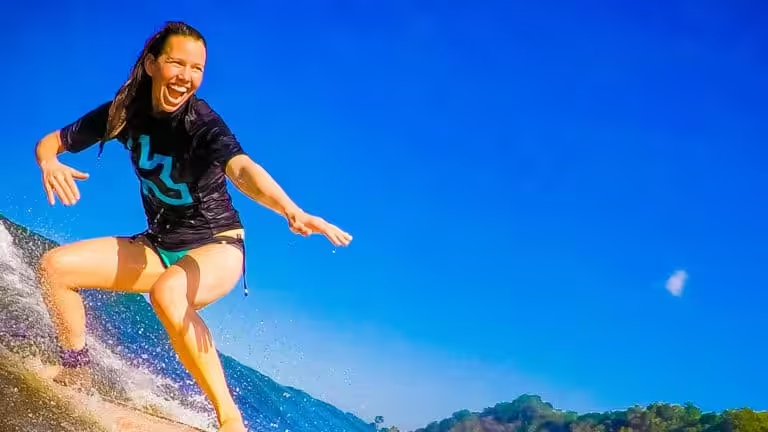
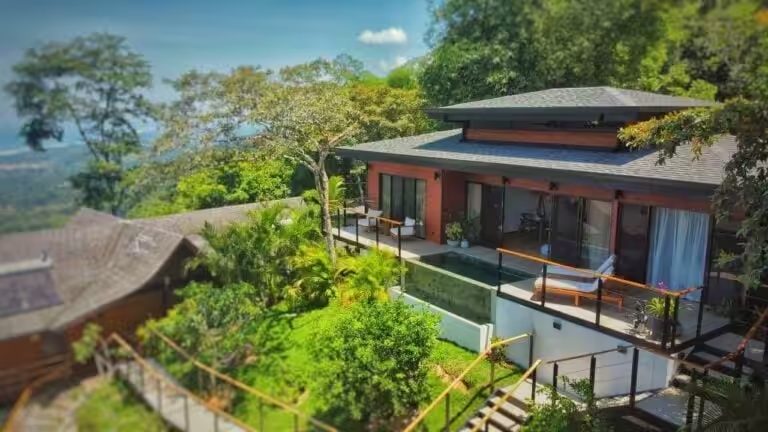
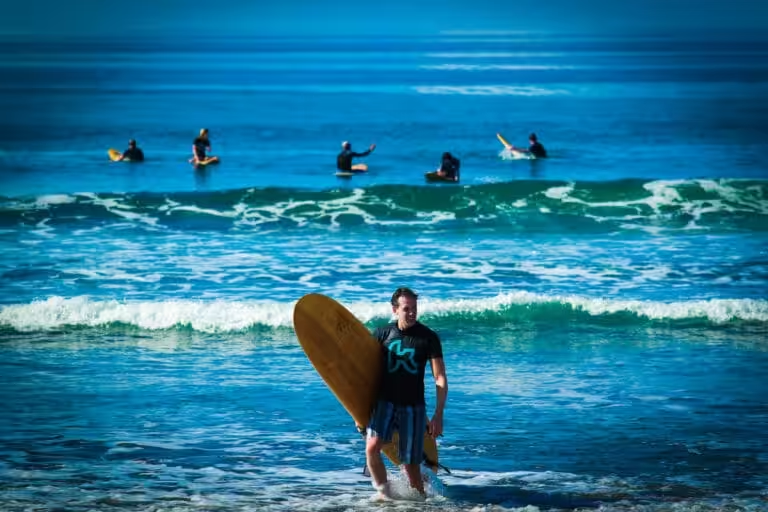
Costa Rica has hundreds of surf breaks. Most travel guides will point you to Tamarindo, Nosara, or Santa Teresa — and those are great spots. But if you want uncrowded waves, consistent year-round surf, and the kind of raw natural beauty that hasn’t been polished by mass tourism, the south Pacific coast around Dominical is where it gets special.
This is where Kalon Surf is based. Our coaches surf these breaks every week, year-round. They know which beach works on which tide, which swell direction lights up which break, and where to go when the conditions change. That local knowledge is what makes the difference between a frustrating session and a great one — especially on a stretch of coast where the beaches look similar from the road but behave very differently in the water.
Here’s what surfing around Dominical actually looks like.
Why the south Pacific coast
Costa Rica’s south Pacific coast, from Dominical down through the Osa Peninsula, is positioned to catch swells from multiple directions: south-southwest, southwest, and northwest. That means the area gets waves year-round — dry season and green season alike. It’s one of the most consistent stretches of coastline in the country.
The water is 78°F (25–26°C) all year. No wetsuit needed, ever. The breaks are predominantly sandy beach breaks — forgiving for learners, fun for everyone. And because the south Pacific coast sees a fraction of the tourist traffic that Guanacaste or the Nicoya Peninsula gets, the lineups are uncrowded. On a good day, you might share a break with a handful of people. On a great day, you might have it to yourself.
The area sits at the beginning of the Osa Peninsula — which National Geographic has called one of the most biologically intense places on Earth. The jungle runs right down to the sand. Howler monkeys, toucans, and scarlet macaws are common. The backdrop to your surf session is genuinely wild, not resort-manicured.
The mountain advantage: why the wind is different here
This is something that surprises a lot of surfers who’ve been to other parts of Costa Rica — particularly Guanacaste, Nosara, or Santa Teresa.
In the north Pacific, the coastline is relatively flat and exposed. Depending on the time of year, strong offshore winds blow during the middle of the day, making it very difficult to surf. We regularly get guests who’ve surfed in Nosara or Playa Guiones, and they describe having to push down hard on the nose of their board just to make the drop — the wind blows up the face of the wave so aggressively that you have to shift your weight significantly forward to get in. In places like Tamarindo and Santa Teresa, the wind pattern essentially forces you into two narrow sessions per day — early morning and late afternoon. In between, it’s blown out.
Around Dominical, the situation is completely different. The mountains of the coastal range come very close to the shoreline — right down to the ocean in some places. That topography acts as a natural wind barrier. We don’t get the aggressive onshore or offshore winds that plague the northern beaches during midday. The result: we can surf from mid to high tide throughout the day, not just in two small windows.
When guests who’ve surfed up north come to Kalon, they’re often surprised by three things: the waves are far less crowded, the environment is dramatically greener with jungle running to the sand, and they don’t have to fight the wind. For many of them, it’s the first time they’ve surfed in Costa Rica without wind being a factor.
The mountains also create remarkable microclimates. It can be raining in Uvita and completely dry at Playa Hermosa, just twenty minutes away. This gives our coaches more options — if conditions aren’t ideal at one beach, there’s almost always another one nearby where they are. The weather around Dominical shifts in pockets rather than blankets, which is a huge advantage for a coached program that selects the best break daily.
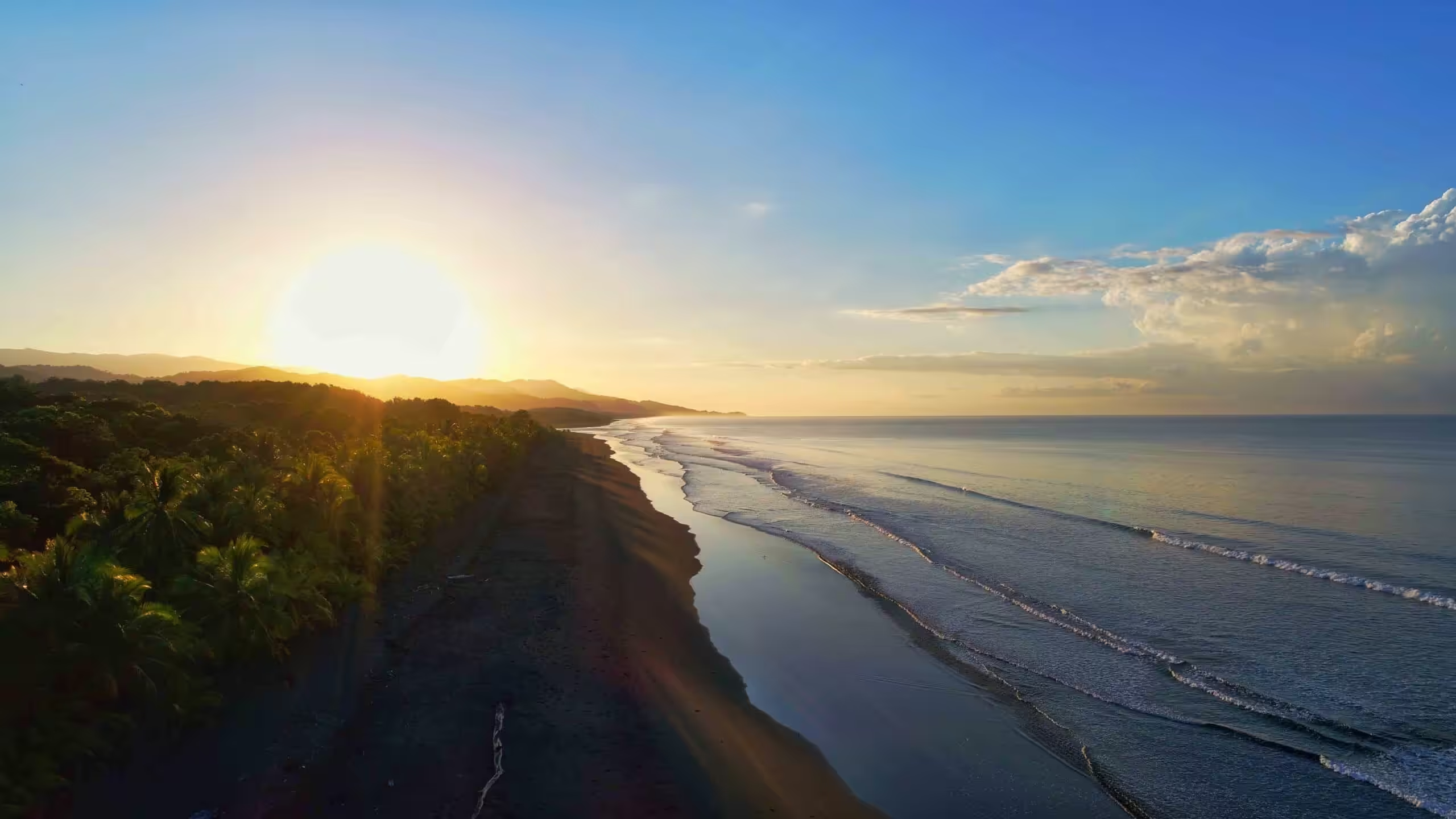
The landscape itself is part of the experience. Palm trees on the beach, jungle-covered mountains as the backdrop, very little construction, and a stretch of coast that still feels genuinely untouched. This part of Costa Rica hasn’t been developed the way Guanacaste has, and it shows — in the best possible way.
The breaks around Dominical
Within about 20–30 minutes of Kalon Surf, there are several distinct breaks — each with its own character, its own ideal conditions, and its own things you need to know before paddling out.
Dominical
The main town beach. It’s a powerful wave that can be very good, but it can also be dangerous — strong rip currents, and it gets gnarly when the swell picks up. This is a major local break, and many of the area’s best surfers call it home.
We don’t coach at Dominical, but it’s worth knowing about. At sunset, it’s one of the most beautiful places to sit on the beach and watch experienced locals surf. If you’ve progressed during your week and want to see what higher-level surfing looks like in real conditions, this is where you go to watch.
Playa Linda
This is where we spend most of our time. It’s a huge beach break — more than two kilometers of sand — which means there’s always space. Depending on the day and the conditions, the wave breaks differently along the beach, and knowing exactly where to position yourself makes all the difference.
The paddle out can be a bit more intense here than at some of the other breaks, but the reward is uncrowded waves and a long stretch of beach where you can surf without pressure. It’s our coaches’ favorite for a reason: it works consistently, accommodates all levels, and the jungle-backed setting is stunning.
We don’t share the specific details of how we navigate this break — that’s earned knowledge from years of surfing here daily. But that’s exactly what you get when you surf with a local coaching team.
Playa Hermosa
About a 25–30 minute drive from Kalon. A really nice wave that we use regularly, especially when conditions favor it. It’s important to know the tide here — at high tide, Hermosa can develop backwash, where the water rushes back off the beach and collides with incoming waves, making it uncomfortable and unpredictable. At the right tide, though, it’s excellent.
The paddle out at Hermosa is typically a bit easier than at Playa Linda. It does attract slightly more surfers than Linda — it’s better known — but it’s still far less crowded than the famous breaks further north.
Dominicalito
A small bay that only works when the swell is big enough to wrap around into it. When it does work, it’s a really good wave — which is why it can get crowded when conditions align. There are rocks and stones to be aware of, so you need to know exactly where you’re going.
The vibe in the water is generally respectful — several surf schools use this break, and there’s an unwritten understanding about sharing waves. But this isn’t a break for someone without local knowledge. If the swell is big enough for Dominicalito to turn on, it’s big enough to cause problems if you’re in the wrong spot.
Playa Matapalo
A bit further south. A solid beach break that works well on the right day. Less well-known than Hermosa or Dominicalito, which means fewer people. Worth knowing about if you’re exploring the area independently after your week at Kalon.
The point break (between Dominicalito and Hermosa)
There’s a point break on this stretch that works when the swell is big. It breaks over reef and rocks, so this is experienced-surfers-only territory. You need to know exactly where to enter and exit. Not something to paddle into without guidance — but when it’s on, it’s special.
The break between Dominical and Dominicalito
This one might not look like much from the beach. It is typically only for professional-level surfers. Inside, it can get very tricky — deceptively powerful with complicated currents. If you don’t know it intimately, stay out.
Further south: Uvita and the Costa Ballena
About 30–40 minutes south of Kalon, the coastline opens up around Uvita and the Costa Ballena area. There are rideable breaks here, but a few things to know:
Uvita / Costa Ballena beaches can work well, but security is more of a consideration. As with all beaches in Costa Rica, don’t bring valuables. Don’t leave things in your car. Be aware of your surroundings. This applies everywhere, but especially at less-monitored breaks.
Playa Ventanas is a unique spot. You have to walk quite a distance from the parking area to reach the break. The wave is a bit funky because of the bay shape, but it works very well for whitewater — making it interesting for specific training scenarios. The beach itself is extremely beautiful, with a large rock formation you can walk through at certain tides. It looks like you’re walking straight into the ocean.
Marino Ballena National Park sits between Uvita and Playa Ventanas. You pay an entrance fee, but the break inside can be good — with no crowds and better security than the open beaches nearby. It’s also where the famous whale tail sandbar is visible at low tide, and where humpback whales come to breed and calve during whale season.
Further north: Quepos and Manuel Antonio
Heading north from Dominical, you reach Quepos and Manuel Antonio — Costa Rica’s most visited national park. There are waves up here, but it’s more hit-or-miss. The surf becomes more consistent from Matapalo southward — which is part of why the Dominical area is where serious surfers and coaching operations are based.
Why local knowledge matters more than surf forecasts
You can check Surfline, Magic Seaweed, or any forecast app — and they’ll give you swell height, period, and direction. That’s useful. But it won’t tell you that this specific beach has a rip forming at mid-tide on the south end today, or that the sandbar shifted after last week’s rain, or that the paddle-out channel moved 50 meters north since yesterday.
That’s the kind of knowledge our coaches bring to every session. They check conditions every morning — not on an app, but with their eyes, their experience, and years of surfing these exact breaks. The daily beach selection isn’t a guess. It’s an informed decision based on tide, swell direction, wind, and what they know about how each break behaves in those exact conditions.
For most of these breaks, we would not recommend surfing without a coach — whether that’s with us or with one of the other good surf schools in the area. There are many experienced coaches around Dominical. The ocean here is powerful, the tidal swings are enormous (up to 14 feet of difference between high and low), and the conditions change significantly from beach to beach and hour to hour.
Even if you’re an experienced surfer visiting from another country, hiring a local guide for your first few sessions is the smartest thing you can do. You’ll get better waves, you’ll be safer, and you’ll learn the area faster than weeks of solo exploration would teach you.
Why we don’t surf the local town break
This is something worth understanding about how we operate.
Dominical’s main beach is a world-class wave. We could coach there — it’s close and the surf is excellent. But we don’t, and it’s intentional.
The local break is where Dominical’s surfers go. Many of them don’t have the means to drive to other beaches — that single break is what they have. Coming in with a group of visiting surfers and taking over their lineup isn’t in the spirit of surfing. It’s the opposite.
When we have the capability to go to other beaches with similar or better conditions and fewer crowds — beaches where our presence doesn’t impact local surfers — why wouldn’t we? That’s a philosophy we’ve held since day one at Kalon, and it’s something we learned from a surf school in Brazil years ago: respect the lineup, respect the locals, and go where you can surf without taking away from someone else’s experience.
It also means our guests surf uncrowded waves without the tension that can come from dropping into someone else’s home break. Everyone wins.
Come surf the south Pacific coast
Whether you’re a first-time surfer looking for forgiving beach breaks and warm water, or an experienced surfer who wants to explore a new coastline with proper guidance, the Dominical area delivers. Year-round waves, uncrowded breaks, wild jungle scenery, and the kind of local knowledge that turns a good session into an unforgettable one.
At Kalon Surf, we handle all of it — beach selection, transport, boards, coaching, video analysis. You just show up, paddle out, and surf the best waves available that day.