The short answer is: it depends entirely on where you’re surfing.
The longer answer — and the one that will actually make you a better surfer — involves understanding why tides matter so much more in some parts of the world than others, why what worked at your last surf spot might not work at the next one, and why local knowledge is the single most underrated factor in getting good waves.
The basics: what tides actually are
Tides are driven by the gravitational pull of the moon and the sun on the Earth’s oceans. As the Earth rotates, different parts of the ocean bulge toward (or away from) these gravitational forces. The result: water levels rise and fall in a predictable cycle.
Most coasts experience two high tides and two low tides per day. Each cycle takes roughly six hours — six hours from low to high, six hours from high back to low. The exact timing shifts by about 40 to 60 minutes each day, which is why the “best time to surf” moves around the clock throughout the week.
The most extreme tides — the highest highs and the lowest lows — happen during new and full moons, when the sun and moon pull in alignment. These are called spring tides (nothing to do with the season). The smallest tidal swings happen during quarter moons, when the sun and moon pull at right angles — called neap tides.
So far, this is textbook stuff. Here’s where it gets real.
Why “which tide is best” is the wrong question
If you’ve surfed one beach, you might assume every beach works the same way. That’s one of the most common mistakes we see at Kalon Surf — guests who’ve surfed in California, or Bali, or Europe arrive assuming they understand how tides affect the surf here.
They don’t. And that’s not a criticism — it’s the nature of the ocean.
Every beach is different. The shape of the seafloor, the angle of the coastline, the distance from shore to the sandbar, the steepness of the beach — all of these determine how a specific tide interacts with a specific break. There is no universal “best tide for surfing.” There’s only the best tide for this beach, today, with these conditions.
That’s why local knowledge matters more than any tide chart.
Costa Rica’s tidal reality: 13 feet of difference
Here’s something that surprises a lot of visiting surfers: Costa Rica has enormous tidal swings.
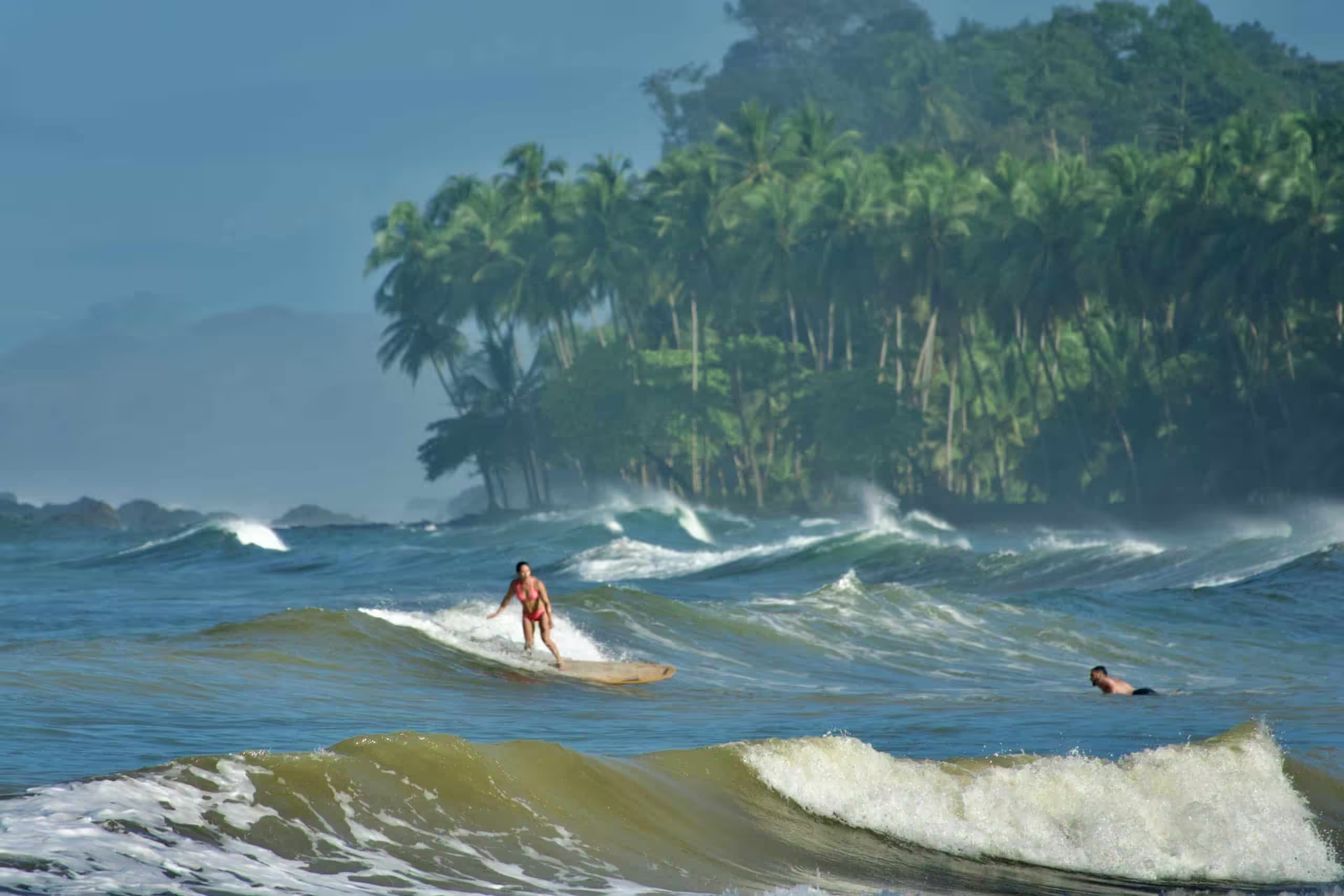
Depending on the alignment of the moon and sun, high tide on the Pacific coast can reach 13 feet — and low tide can drop to minus one. That’s a 14-foot difference between the highest and lowest water levels on the same beach, on the same day.
Compare that to a place like Hawaii, where the tidal range is often 2–3 feet, or parts of the Mediterranean with barely any tidal movement at all. In Costa Rica, the tide doesn’t just affect the surfing — it fundamentally changes the character of the wave.
Here’s what that means in practice:
At low tide, many of our beach breaks become very shallow and very fast. The waves jack up quickly over the sandbar and dump hard. For beginners, this is uncomfortable at best and dangerous at worst — you can hit the bottom. For experienced surfers, it can be fun but unforgiving.
At high tide, the opposite problem can emerge. With so much water, the waves can become “fat” and slow — they don’t break cleanly because there’s too much water depth for the sandbar to shape the wave properly. On some beaches, you also get backwash: the beach can’t absorb all the water, so it rushes back out and collides with incoming waves. If you’ve ever seen waves that look confused and choppy for no obvious reason, that’s often backwash. It’s like water sloshing in a bathtub — and it makes surfing uncomfortable and unpredictable.
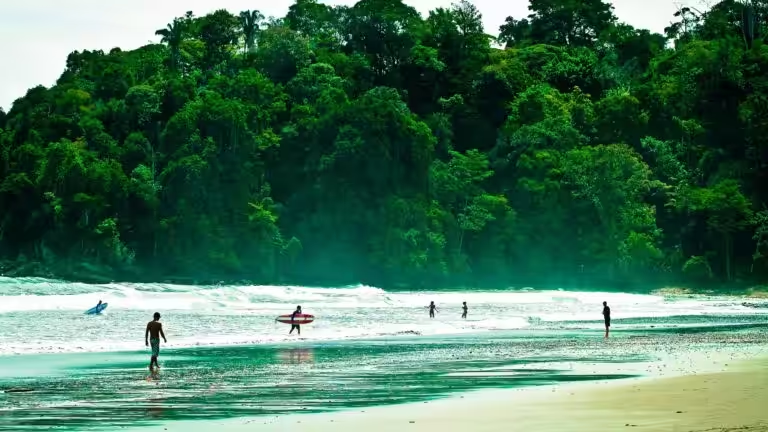
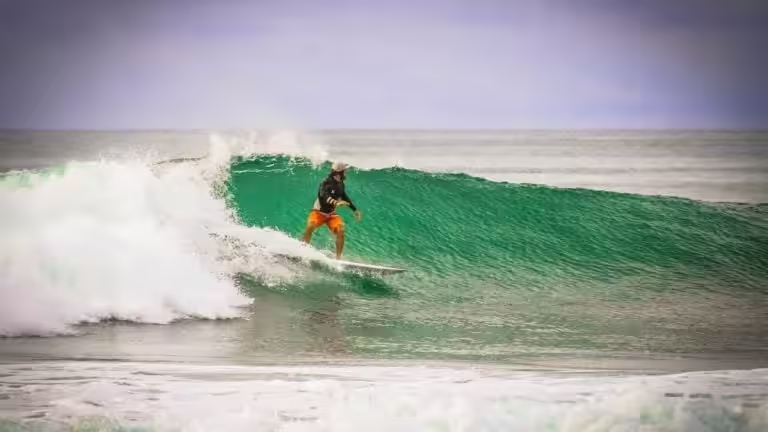
At mid to high tide — which is where most of the beaches around Dominical work best — the balance is right. Enough water for the waves to form properly and break cleanly, not so much that you lose the shape to fat faces or backwash.
This is why at Kalon, we surf around the tides, not on a fixed schedule. Our coaches check the tide tables, swell direction, and wind conditions every morning and pick the best beach and the best window for that day. The schedule moves — sometimes we surf early morning, sometimes late morning, sometimes afternoon. The tides shift 40 to 60 minutes each day, and our program shifts with them.
Why we surf once per day
Guests sometimes ask why we don’t do two sessions per day. The answer is tides — and daylight.
The optimal surfing window on most of our breaks is roughly a 3–4 hour stretch around mid to high tide. Outside that window, conditions deteriorate — either too shallow (low tide) or too much water (peak high tide with backwash).
On top of that, Costa Rica is close to the equator, which means the sun sets between 5:00 and 6:00 PM year-round. There aren’t long summer evenings like in California or Europe where you can squeeze in a sunset session at 7:30 PM. When the light goes, it goes fast.
So one focused, well-timed session per day — typically 3 to 4 hours — is genuinely the best way to maximize your time in good conditions. More sessions wouldn’t mean more quality waves. It would just mean surfing in worse conditions.

The case for local knowledge (even if you’re experienced)
This is something I feel strongly about: even an advanced surfer, if they’ve never been to a specific area, should hire a local guide or coach.
It doesn’t matter how many years you’ve surfed or how well you read tide charts. A tide chart tells you the water level. It doesn’t tell you that this specific beach has a rip current that forms at mid-tide on the south end, or that the sandbar shifted last week and the wave is breaking 30 meters further north than usual, or that low tide exposes rocks that weren’t visible yesterday.
Our coaches at Kalon have been surfing these breaks for years. They know which beach works on which tide, which swell direction lights up which break, and how yesterday’s rain might have shifted the sand. That local knowledge is why our guests consistently surf better waves than they would find on their own — even the experienced ones.
We typically rotate between several beaches depending on conditions, though sometimes we stay at the same one for days if that’s where the waves are best. The decision is made fresh every morning based on current data, not a preset schedule.
Respecting the local lineup
There’s another dimension to beach selection that goes beyond wave quality, and it’s something I learned years ago from a surf school owner in Brazil.
He explained why his school didn’t surf at the local town break. Two reasons: it gets crowded, and many local surfers don’t have the means to travel to other breaks. That single break might be the only one they have access to. Coming in with a group of visiting surfers and taking over their lineup isn’t in the spirit of surfing — it’s the opposite of it.
When you have the capability to go to other beaches with similar or better conditions and fewer crowds, why wouldn’t you? That’s a philosophy we’ve always applied at Kalon. We go where the conditions are good and where our presence doesn’t impact local surfers who depend on that break.
It’s a small thing, but it matters. And it means our guests surf uncrowded waves without the tension that comes from dropping into someone else’s home break.
What this means for you
If you’re researching “which tide is best for surfing” because you’re planning a trip — here’s the honest takeaway:
Learn the basics. Understanding that tides exist, that they change the wave, and that different beaches work at different tides is genuinely useful knowledge. It makes you a more aware surfer.
Don’t assume transferability. What worked at your last spot may not work at the next one. Tidal ranges vary enormously between regions. A 2-foot tidal range in Hawaii and a 14-foot range in Costa Rica create completely different surfing realities.
Trust local knowledge. Tide charts are a starting point, not an answer. A good local guide or coach will get you into better waves than any app or forecast. If you’re visiting somewhere new — especially somewhere with big tidal swings like Costa Rica — investing in coached sessions will give you better surf than going solo with a tide table.
If you’re coming to Kalon, you don’t need to think about any of this. Our coaches handle all of it — tides, swell, wind, beach selection, timing. You just show up, paddle out, and surf the best waves available that day. That’s what personalized coaching is for.