The honest answer: it depends entirely on how you learn.
If you’re teaching yourself with a rented board on a crowded beach, expect the basics — standing up, riding whitewater toward shore — to take around 30 hours of practice. Catching and riding green (unbroken) waves on your own could take 100 to 160+ hours. That’s months of weekend sessions, assuming you live near the ocean.
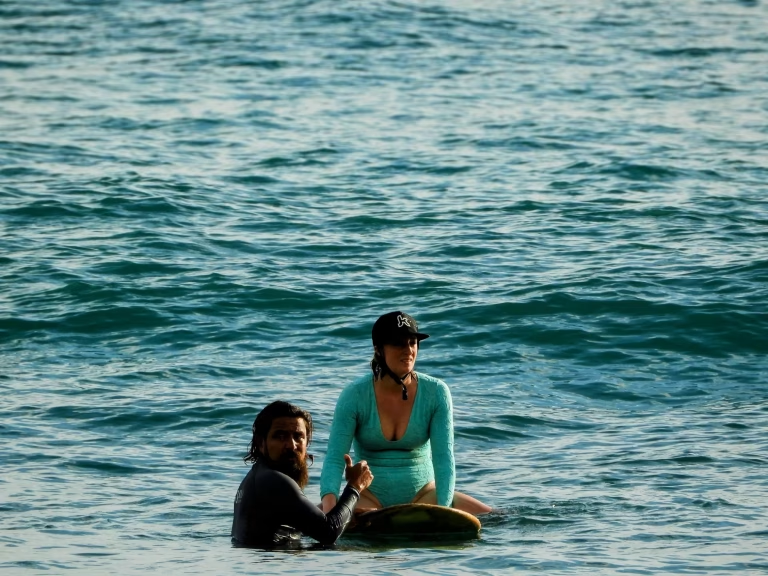
If you’re learning at a coached surf retreat with structured daily sessions, video analysis, and personalized instruction? Most people are riding green waves within a single week.
That’s not marketing. That’s what we see happen at Kalon Surf almost every week, with guests who have never touched a surfboard.
What a week of learning actually looks like
We coach beginners every single week, year-round. Over more than a decade, the progression pattern has become remarkably consistent — though everyone gets there differently. Some people fly through the first two days and slow down toward the end. Others struggle for the first two or three days until something suddenly unlocks and clicks. Both are completely normal.
Here’s the general shape of the week:
Day 1: You stand up
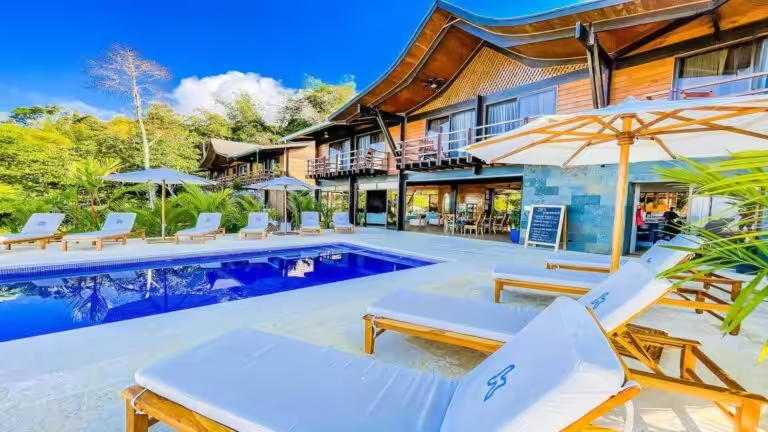
Before you go anywhere near the ocean, you start in the pool. At Kalon, our infinity pool doubles as a training ground where you practice your pop-up, get comfortable lying on the board, and build confidence in a controlled environment. Then dry land drills on the beach — rehearsing the movement until it starts to feel natural.
Then the water. Your coach is right there with you, positioning you for waves, pushing you into them at the right moment, calling out when to pop up. Most guests stand on their board for the first time on day one. Not perfectly, not every time — but the feeling is there. And that feeling is what hooks people.
Day 2: Whitewater waves
Now you’re catching and riding broken waves (whitewater) with increasing consistency. Your pop-up is getting smoother. You’re starting to understand how the board moves under you. Your coach is refining your stance, your hand placement, your timing. In the afternoon, you watch yourself on video during the daily analysis session and see exactly what you’re doing — which is often very different from what you think you’re doing.
Day 3: The wall
This is the day our coaches know is coming. Day three is where many guests start overthinking. The board isn’t doing what they want it to do. They’re frustrated because they felt good yesterday and today everything feels harder.
This is completely normal, and it’s where good coaching makes the difference. We tell our guests: look around you. You’re in warm water. You’re on a beautiful beach in Costa Rica. You’re eating watermelon between sets. You have a coconut in your hand. The best surfer is the one having the most fun — and the more you try to force surfing, the worse it gets. In life, it’s kind of like that too. Sometimes you need to stop overdoing things for things to flow.
Once guests relax and stop fighting the process, something shifts. The technique starts clicking.
Days 4–5: Green waves
This is where it all comes together. The overthinking fades, muscle memory kicks in, and many guests move to green (unbroken) waves. The video analysis accelerates everything — you can see your positioning, your timing, your paddle speed and adjust the next session.
By the end of the week, most guests are riding green waves with guided positioning from their coach. Some are catching them independently. Everyone leaves knowing what they’re doing in the water.
There is no single learning curve
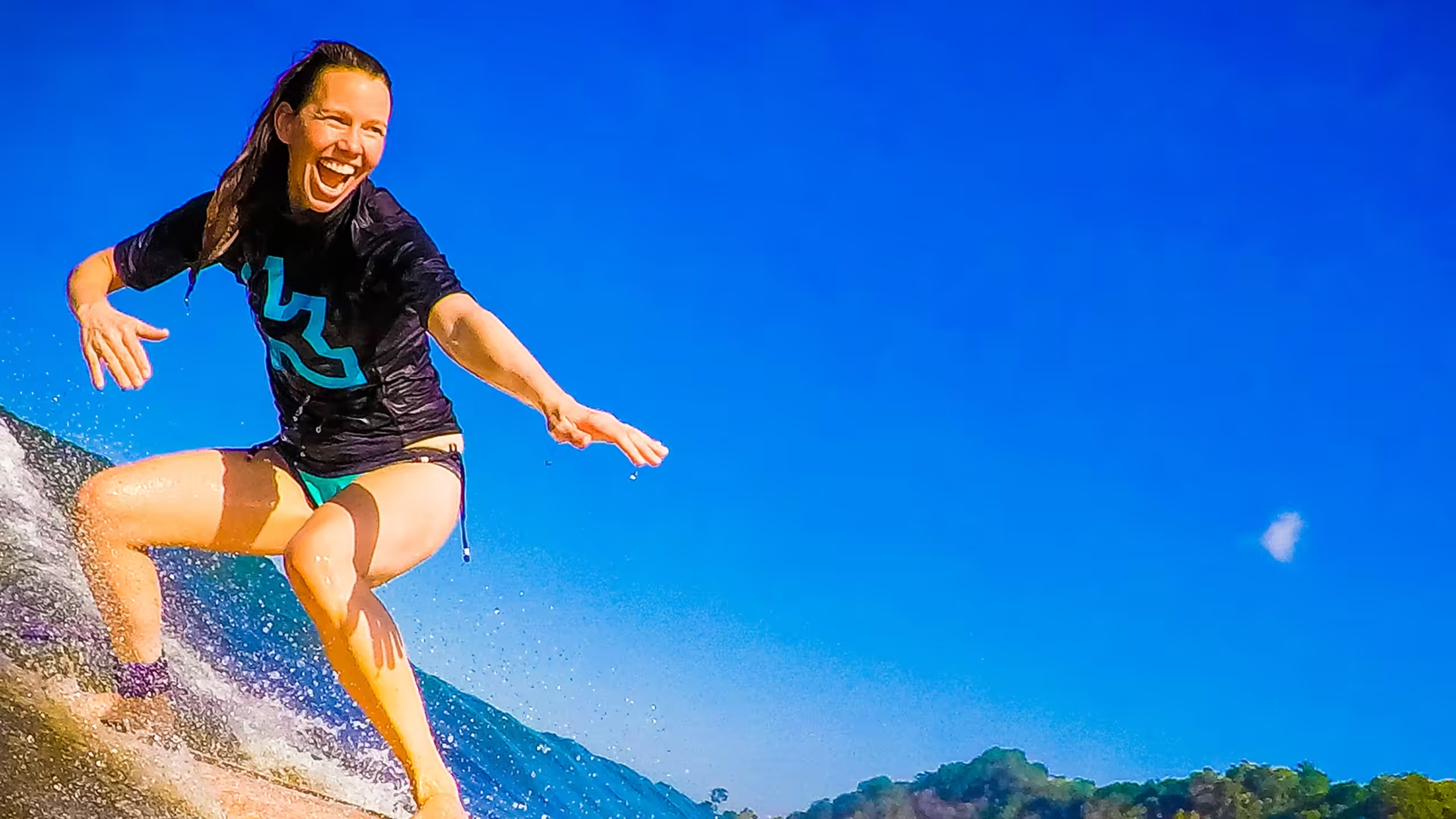
Everyone has a different path. We’ve coached thousands of guests, and no two progressions look exactly the same.
Some people are naturally coordinated and pick it up fast. Some are incredibly fit but struggle because surfing rewards technique over strength — we regularly see gym-goers have a harder time than people who’ve never worked out, simply because surfing doesn’t care about your bench press. It cares about how you move.
Our oldest first-time surfer was 82. Our youngest guests learn alongside their parents. Age matters far less than attitude and willingness to listen.
The one thing that consistently separates fast learners from slow learners isn’t fitness or age — it’s mindset. The guests who stay relaxed, stay curious, and focus on the process rather than the outcome always progress faster.
The mental game: focus on what worked
This is something I tell guests all the time, and it applies well beyond surfing.
Say you’re a beginner and you’ve just caught a green wave for the first time. You drop in, you try to turn, and you fall. You can react two ways: you can be frustrated that you fell, or you can be excited that you actually turned. Same moment, completely different experience.
Focus on what worked and what didn’t. There are many more waves coming, and they’re all free. It’s much more interesting to figure out what you did right and how to fix what went wrong than to beat yourself up about falling.
And here’s a practical tip: if something isn’t working — say your feet keep ending up in the wrong position — don’t waste precious water time drilling foot placement. You can practice that movement 10 or 30 times on the sand in five minutes. It’s just muscle memory. If you can do it on the beach, you can do it on the board. You just need to let go and trust it.
Our coaches use this approach constantly. During video analysis, they’ll identify a specific issue — foot position, weight distribution, where you’re looking — and you’ll practice the correction on dry land before your next session. When you get stuck, go back to the basics. It works every time.
After the week: what happens next
In a week at Kalon, you will ride a green wave and know what you’re doing. That’s the foundation. What happens after depends on how much you surf and how you approach it.
Progression from there is partly technique and partly mental. A lot of people eventually forget that surfing is still supposed to be fun. When you’re too focused on the outcome — landing the turn, hitting the lip, surfing like the person next to you — instead of the process, it becomes complicated. That applies to most things in life, not just surfing.
You’re also going to discover that conditions matter more than you expect. What you learned at one spot doesn’t automatically transfer to another. The wave is different, the board might be different, the tide and current are different. We’ve seen people surf beautifully at a break they’ve known for years, then struggle completely when they go somewhere new.
If you’re always going to surf the same break and that’s what you love — that’s perfectly fine. But if you want to travel and surf different places, we’d suggest trying different beaches and different boards whenever you can. This helps you learn what works for you regardless of the conditions, so you can adapt rather than relying on familiarity.
Think about where you want to go
There’s no single destination in surfing. At some point, it helps to ask yourself what kind of surfer you want to be:
Do you want to ride a shortboard and work on sharp turns and speed? Do you want to get into bigger waves? Do you want to ride a longboard and enjoy the flow of dancing on a wave? Do you just want to cruise and have fun in the water with your kids?
There’s no wrong answer. The key is to stay relaxed and go with it. There is a technique and there are foundations. If your foundations are solid, you can build on them in any direction, bit by bit.
The difference between learning and being pushed
This is something worth understanding before you book any surf experience, anywhere.
At many surf schools, especially the “try surfing for two hours” kind, the approach is simple: give you a very large board with a lot of volume, push you into a wave, and let the board do the work. You stand up, you feel incredible, you think you’ve surfed.
But you haven’t really learned how to do it on your own. You were pushed. The board caught the wave because of its size, not because of your paddling. The pop-up worked because you had a stable platform, not because your technique was right. Take away the push and the oversized board, and you’re back to square one.
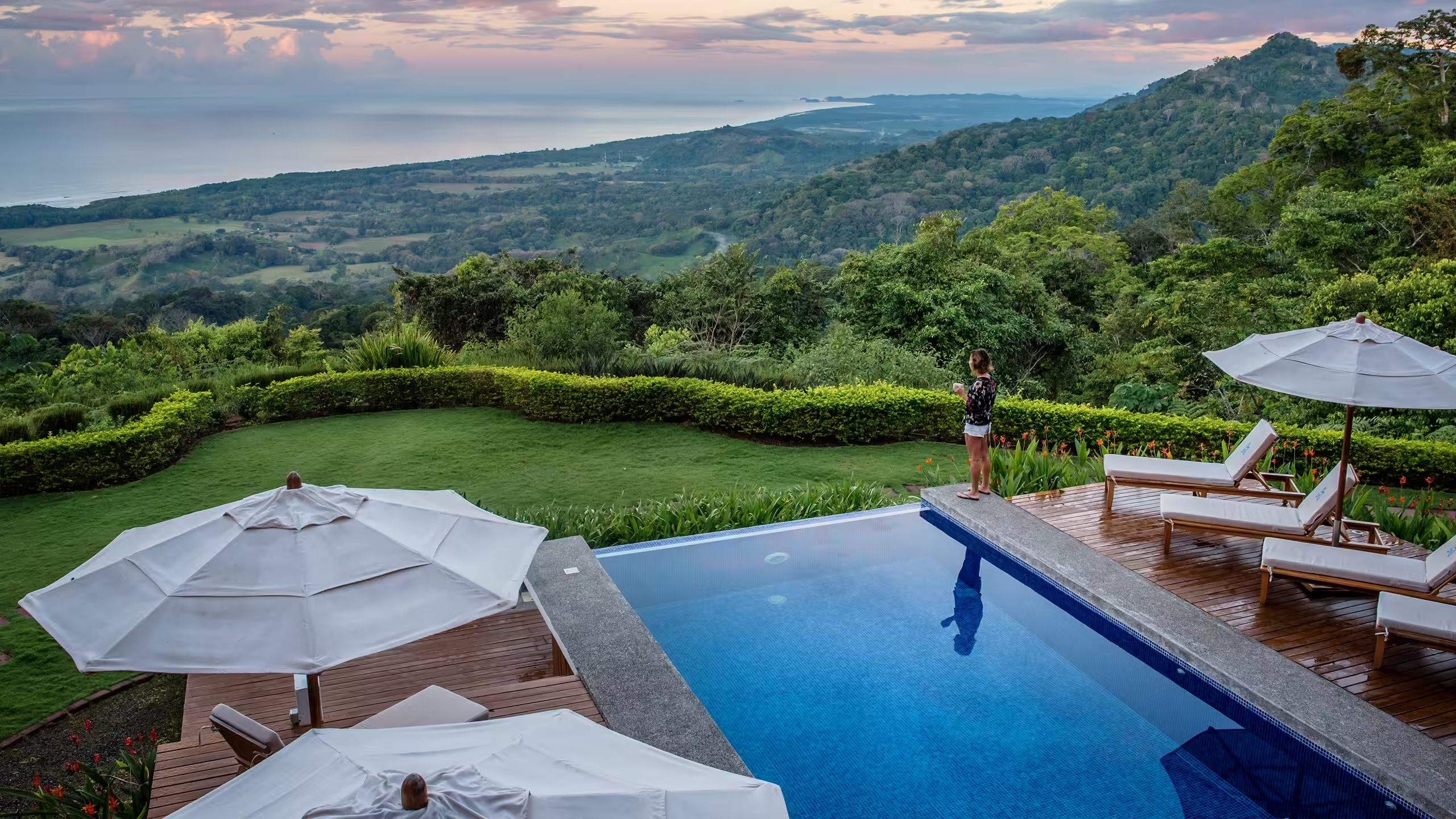
At Kalon, we have the luxury of a full week — five surf days with 3–4 hour sessions, pool training, dry land drills, and daily video review. That structure means we teach you to actually surf: to paddle into waves yourself, to read the ocean, to pop up with proper technique, to understand positioning and timing. When you leave, you can do it again — at any beach, on a properly sized board, without someone pushing you.
That’s the real answer to “how long does it take to learn to surf.” Not just to stand on a board — but to understand the sport, to know what you’re doing, and to keep progressing on your own.
Don’t overcomplicate it
Surfing looks beautiful and effortless from the beach, and it’s not — there’s a real learning curve. But at the same time, don’t overthink it. It is something anybody can do. You don’t need to know all the theory. You just need to learn certain basics, bit by bit, and start feeling what works for you.
As you get older, some things might work differently than they used to — and that’s fine. It’s about keeping track of what works for your body, your balance, your style. There are styles for everyone, from radical shortboarding to relaxed longboarding. The foundations are the same. The direction is yours.