We see it every week.
Someone arrives at Kalon who has wanted to try surfing for years. They’re excited — genuinely excited — and then the ocean is right there in front of them, and something tightens up. It might be fear of getting hurt. It might be not wanting to look stupid in front of the other guests. It might just be a quiet, persistent voice saying I’m not sure I can do this.
That feeling is more common than people think, and it has nothing to do with age, fitness level, or athletic ability. Surf anxiety is real — and it shows up in people who are otherwise confident, capable, and very much ready to be here. It has to do with being human.
What we’ve found — after more than a decade of coaching guests here on the Pacific coast of Costa Rica — is that anxiety goes down when structure goes up. The feeling of being overwhelmed is almost always a feeling of not knowing what comes next. Once you know what comes next, the fear has less room to live.
That’s the foundation of how we coach here. And it shapes everything.
Surfing Is 50% Skill and 50% Psychology
Most surf instruction focuses on the physical: how to pop up, how to read a wave, where to position on the board. All of that matters. But after years of coaching guests of all levels, we’d say that technique accounts for roughly half of what makes someone progress — and feel good in the water.
The other half is knowing how to work with the person in front of you.
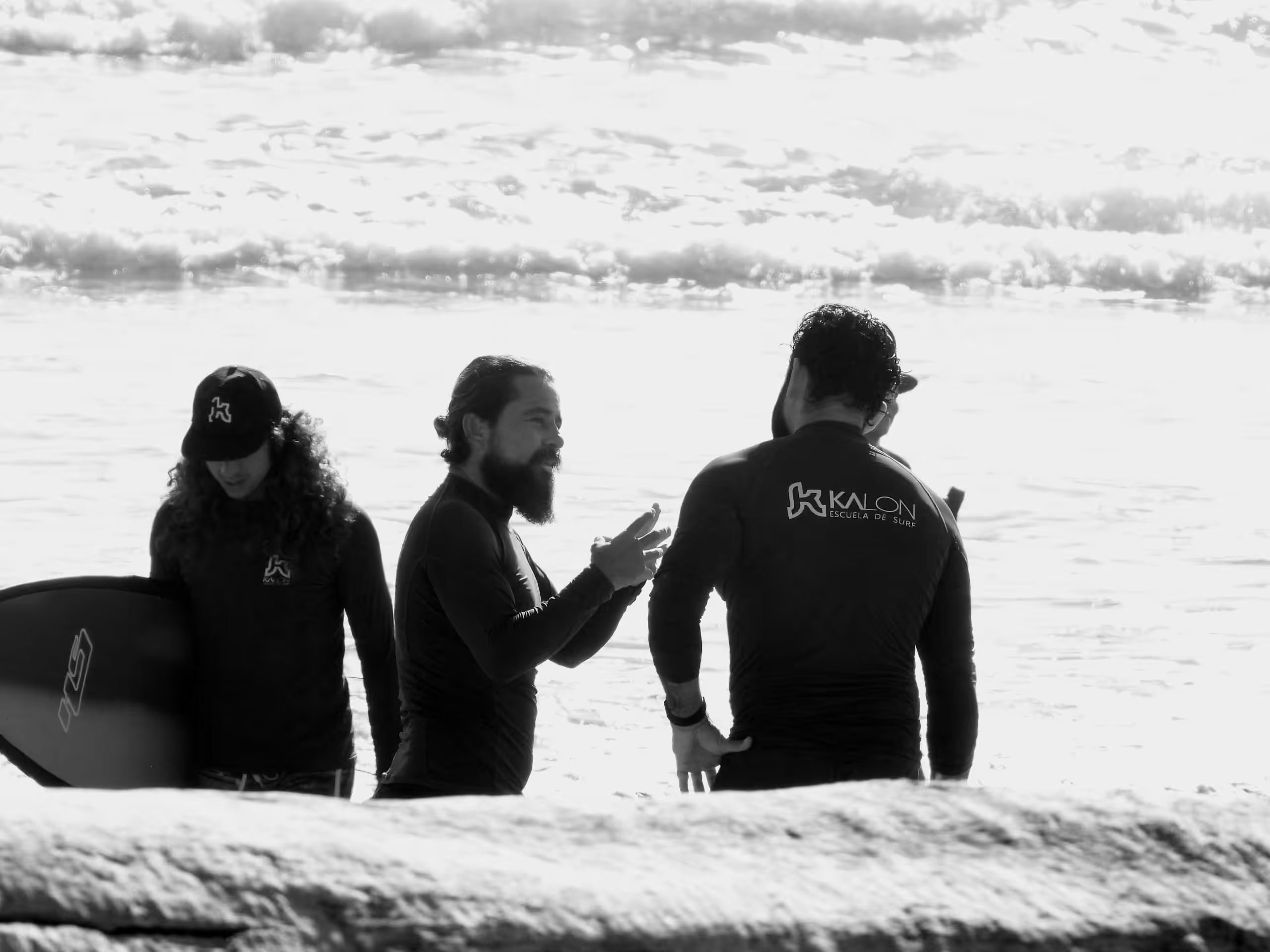
Anxiety doesn’t always look like fear. Sometimes it shows up as frustration. As shutting down, going quiet, wanting to quit. As snapping at yourself after a fall. Our coaches are trained to recognize those moments and respond to them — not just to paddle back out and try again, but to actually connect, slow things down, and help someone find their footing. Emotionally as much as physically.
This is why we hire for passion and care, not just surfing ability. If someone doesn’t genuinely enjoy teaching — if they’re not paying attention to how a guest is feeling, not just how they’re riding — they’re not the right fit for what we do here.
Four Things We Do Differently
There are four specific things we build into every week at Kalon that make a real difference for guests who are nervous about the water.
All of our coaches are lifeguard trained. This is partly about safety — obviously — but it’s also about the feeling of security it gives guests before they ever get in the water. Knowing that the person next to you is genuinely qualified to help if something goes wrong means there’s one less thing your brain has to worry about.
We have clear protocols on the beach and in the water. Nothing is improvised. Before anyone paddles out, they know what to expect, what to do if they fall, how to protect themselves from their own board. That predictability is calming. It gives the nervous system something to hold onto.
We do breathing exercises in our pool sessions. This one surprises people the most, but it might be the most impactful thing we do for anxiety. One of the great fears of surfing is being held underwater by a wave — and the imagination tends to turn a two-second hold-down into something much longer and more frightening than it is. In the pool, we work on breath-holding in a calm environment. You discover that you can hold your breath easily for 20, even 30 seconds. You start to understand that the ocean isn’t holding you under — you’re just underwater briefly, and then you’re not. That realization changes everything.
We provide helmets. A helmet protects you if a board comes near your head. But beyond the physical protection, it does something psychological too: it removes one more thing you have to think about. You can still get bumped, you still need to be aware — but you can be slightly less worried. In a sport where the nervous system is already working overtime, that reduction in cognitive load matters.
What You Leave With
None of this is about eliminating fear. Fear is a reasonable response to learning something new in a powerful environment. What changes, over the course of a week, is your relationship to it.
By the end of most weeks, guests who arrived nervous aren’t nervous anymore. Not because the ocean got smaller or easier, but because they built a real understanding of what they’re doing — and they did it with people who were genuinely paying attention to them. We see this regularly with guests in their 40s and 50s trying surfing for the first time. The ocean doesn’t require you to be young. It requires you to be guided.
That shift tends to extend further than surfing. It’s one of the things guests write to us about long after they’ve left.