Costa Rica has long been at the forefront of sustainable tourism — over 25% of the country is protected in national parks and reserves, and renewable energy powers virtually all of the electricity grid. For travelers who care about the environmental footprint of where they stay, Costa Rica offers some of the most credible eco-luxury options anywhere.
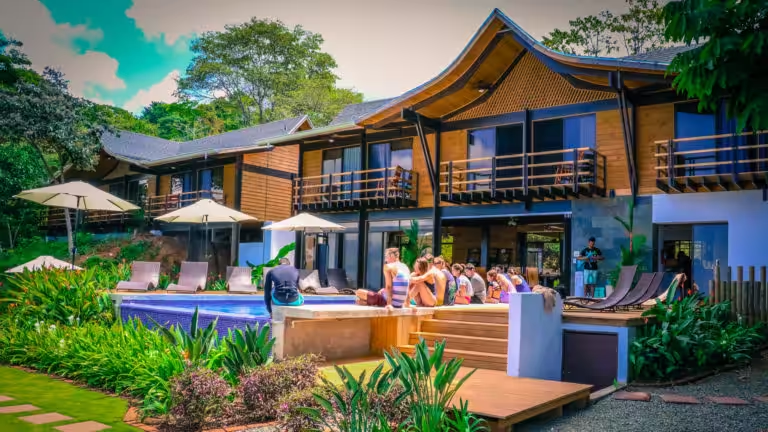
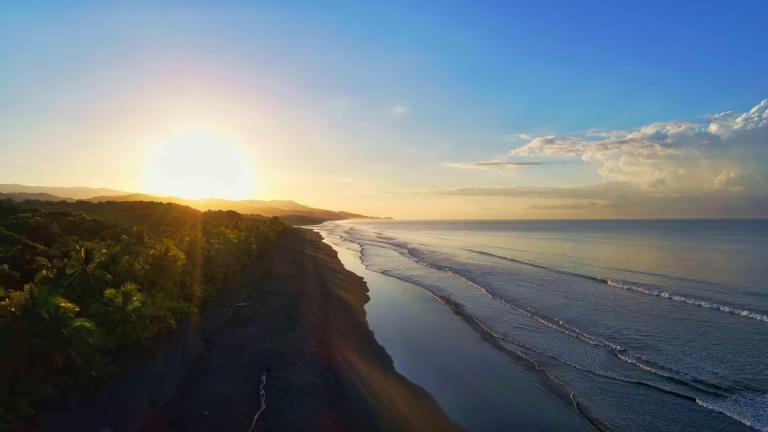
At Kalon, our luxury surf resort sits on 6.4 acres of private rainforest at 1,200 feet above the Pacific coast. When we built the property, we made deliberate choices about how to work with the environment rather than against it — and those choices shape every part of the guest experience today.
What Makes a Resort Truly Eco-Friendly?
The term “eco-friendly” gets used loosely in hospitality. Some properties plant a few trees, ban plastic straws, and call it sustainability. Others build environmental responsibility into their foundations — literally and operationally.
The meaningful indicators tend to be: how the property integrates with its natural surroundings rather than replacing them, whether it employs and supports the local community, how it manages water, energy, and waste, and whether guests can see and feel the difference rather than just reading about it in a brochure.
Costa Rica’s ICT (Instituto Costarricense de Turismo) runs a certification program that evaluates properties on sustainability criteria. Kalon holds a 5-star ICT rating — the highest level — which Silene pushed to formalize as part of our commitment to quality and accountability.
How Kalon Approaches Sustainability
Our approach isn’t performative. It’s practical. The property was designed to preserve the existing jungle canopy rather than clear it. Toucans, sloths, and monkeys are regular visitors — not because we built a wildlife exhibit, but because their habitat was never removed.
Our entire team is Costa Rican. Head Chef Josué grew up just down the road from Dominical and sources ingredients locally and seasonally. The food isn’t “locally inspired” as a marketing angle — it’s local because that’s how Josué cooks and where the best ingredients come from.
We provide reef-safe sunscreen to every guest. Costa Rica has banned the sale of oxybenzone-based sunscreens — a chemical proven to cause coral bleaching even in tiny concentrations. Our coaches select surf spots daily based on conditions, and part of that selection includes protecting sensitive reef areas.
The broader philosophy is straightforward: we take care of this place because it’s our home, our team’s home, and because the natural environment is the reason guests come here in the first place. If we don’t protect it, we lose the thing that makes Kalon what it is.
Notable Eco-Luxury Properties in Costa Rica
Costa Rica has several properties that demonstrate what genuine eco-luxury looks like:
Lapa Rios Lodge (Osa Peninsula) — Set within a private nature reserve bordering Corcovado National Park, Lapa Rios has been a pioneer in eco-tourism since the 1990s. The lodge supports conservation research and employs almost entirely from the local community.
El Silencio Lodge & Spa (Bajos del Toro) — A Relais & Châteaux eco-lodge in a 500-acre private cloud forest reserve. Their restaurant sources from their own organic garden and trout ponds. Silene and I both love it — it shares our values of local staff, great food, and design that works with the environment.
Pacuare Lodge (Turrialba) — Accessible only by white-water raft, which tells you something about the commitment to keeping the setting untouched. Solar-powered, no road access, and surrounded by primary rainforest.
Choosing an Eco-Friendly Resort That Matches Your Values
The questions worth asking are: does the property employ local people in meaningful roles? Can you see the environmental practices, or are they just mentioned on the website? Does the food come from the region? Is the natural environment genuinely preserved, or has it been landscaped to look “natural”?
At Kalon, guests walk our jungle trail into primary rainforest. They watch howler monkeys from the pool. They eat food that was growing nearby that morning. The sustainability isn’t a feature — it’s the setting.
If you’re considering packing surf gear for luxury surf resorts, choosing reef-safe products is one of the simplest ways to travel responsibly. And choosing a resort that takes its environmental responsibility seriously means your week in the water contributes to protecting the coastline rather than degrading it.