Costa Rica is a dream destination for travelers seeking a mix of adventure, relaxation, and natural beauty. With pristine beaches, lush rainforests, world-class surfing, and a welcoming culture, it’s no wonder this Central American paradise attracts visitors from around the world. Whether you’re planning your first trip or returning for another visit, this guide covers what you need to know before you go.
Best Time to Visit Costa Rica
Costa Rica has two primary seasons:
- Dry Season (December–April): Sunny days and minimal rainfall. The northern Pacific coast (Guanacaste) gets significantly hotter during these months — temperatures regularly push into the mid-90s°F — while the central and south Pacific coast around Dominical stays more comfortable in the low-to-mid 80s.
- Green Season (May–November): Lush landscapes and fewer crowds. Contrary to popular belief, the green season often features sunny mornings with cooling rain showers in the evening, especially along the Southern Pacific Coast. June through August is veranito — the “little summer” — which is effectively dry season with a greener landscape and bigger swells.
We love September and October, as do many of our returning guests. During this time, you’ll experience south-southwest (SSW) swells, typically blue skies during the day, water temperatures around 78°F, and outside temperatures ranging from 82–88°F, often capped off with a beautiful rain shower before nightfall. The evening storms that roll in over the Pacific can be genuinely spectacular — watching lightning over the ocean while having dinner is something guests remember long after they leave.
It’s important to note that Costa Rica has over 1,000 microclimates, meaning the weather can vary dramatically just 15–20 minutes apart. Inland areas and the northern coast tend to get more rain during the green season than the central and south Pacific. In surf-rich regions like our area around Dominical, we may start the day at one break, only to find ideal conditions a short drive up or down the coast. The variability works in your favor — flexibility leads to adventure.
For a detailed month-by-month breakdown, see our seasonal surf guide.
Visa & Entry Requirements
U.S. Citizens: No visa required. Authorities may allow stays of up to 180 days, though the exact duration is at the discretion of the immigration officer at your point of entry. A return or onward ticket is required.
Canadian & Most European Travelers: Visa-free entry, typically granted for up to 90 days. Same return ticket requirement applies.
Passport Requirements: Your passport must be valid for at least six months beyond your travel date. While some sources cite shorter requirements, six months is the safest threshold and what we recommend.
Proof of Funds: Immigration may ask for proof of at least $100 USD per month of your intended stay. A credit card or bank statement is usually sufficient.
Departure Tax: There is a $29 USD departure tax per person. Most major airlines (American, Delta, United, JetBlue, Southwest, Air Canada, Copa, and others) now include this in the ticket price. Check your fare breakdown to confirm — if it’s included, you’ll see it listed under taxes and fees. If your airline doesn’t include it, you’ll need to pay at the airport before check-in (cash in USD or colones, or credit card with an additional fee).
Yellow Fever Vaccination: Required only if arriving from certain countries in South America or sub-Saharan Africa. Not required for travelers coming from the US, Canada, or Europe.
Digital Nomad Visa: Costa Rica offers a digital nomad visa allowing remote workers to stay for up to a year. Worth looking into if you’re considering an extended stay.
Always check with the Costa Rican immigration authority or your country’s travel advisories for the most current requirements before traveling.
Getting Around Costa Rica
- Domestic Flights: Ideal for quick travel between coasts, with airlines like Sansa and Green Airways offering flights to popular destinations.
- Car Rentals: Renting a 4×4 is recommended if exploring mountainous areas or remote beaches. Roads in the south Pacific can be rough, especially during green season.
- Public Transport: Buses are affordable but slow. Shuttle services like Interbus offer a more convenient alternative for point-to-point travel.
- Rideshare & Taxis: Uber is available in the San José area. Official red taxis are common throughout the country — always confirm the price before getting in.
- Boat Transfers: For remote beach towns or islands like Tortuguero or Drake Bay, boat transfers are often the best (or only) option.
If you’re coming to Kalon Surf: We handle your transport. A private SUV picks you up at San José airport (SJO) and takes you on the scenic 3-hour drive down the coast to the resort. Same on departure. No rental car needed.
Top Places to Visit
San José & The Central Valley
- Best for: Cultural experiences, museums, and a base for day trips.
- Highlights: National Theater, Mercado Central, Poás Volcano, La Paz Waterfall Gardens (which we can arrange as a departure-day excursion).
The Pacific Coast
- Best for: Surfing, beach vacations, and adventure.
- Highlights:
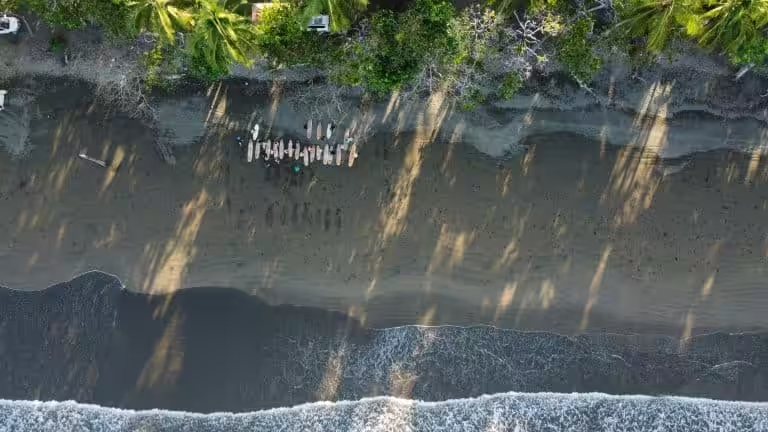
- Dominical & Uvita: This is where we are — and we’re biased, but the south Pacific coast offers uncrowded beaches, world-class surf breaks, whale watching at Marino Ballena National Park, stunning waterfalls, and a landscape that hasn’t been polished by mass tourism. The mountains protect the coastline from wind, creating conditions you can surf all day — unlike the northern Pacific where midday blowout is common.
- Tamarindo: A popular surf town with vibrant nightlife. Hotter and more developed than the south.
- Santa Teresa: Laid-back beach destination with excellent waves. Remote — plan for travel time.
- Manuel Antonio: A mix of beaches, jungle, and wildlife in one compact national park. About 45 minutes north of Dominical.
The Caribbean Coast
- Best for: Laid-back vibes, Afro-Caribbean culture, and nature.
- Highlights:
- Puerto Viejo: Reggae culture, surfing, and jungle adventures.
- Tortuguero: A must-visit for turtle nesting season and untouched nature — accessible only by boat or small plane.
Monteverde & Arenal
- Best for: Cloud forests, volcanoes, and adventure seekers.
- Highlights:
- Arenal Volcano: Hot springs, hiking, and waterfalls.
- Monteverde Cloud Forest: Canopy tours, zip-lining, and diverse wildlife.
- Rio Celeste: A stunning bright blue river inside Tenorio Volcano National Park.
Must-Do Activities
Costa Rica is an outdoor enthusiast’s paradise:
- Surfing: Year-round waves on both coasts. The south Pacific around Dominical offers uncrowded breaks with consistent swell from multiple directions.
- Wildlife Watching: Spot sloths, toucans, and howler monkeys in national parks. Manuel Antonio and Corcovado are highlights.
- Hiking & Waterfalls: Nauyaca Falls (20 minutes from Dominical), La Fortuna Waterfall, and Rio Celeste.
- Whale Watching: Southern hemisphere humpbacks July–November, northern hemisphere December–March. Uvita is the epicenter.
- Zip-lining: Soar above the Monteverde Cloud Forest or closer to Dominical.
- Scuba Diving & Snorkeling: Caño Island (boat trip from Uvita/Drake Bay) for some of the best marine life in Costa Rica.
- Whitewater Rafting: The Pacuare River is world-class.
- Cultural Tours: Coffee plantations, chocolate-making, and indigenous community visits.
Your Costa Rica Surf Escape
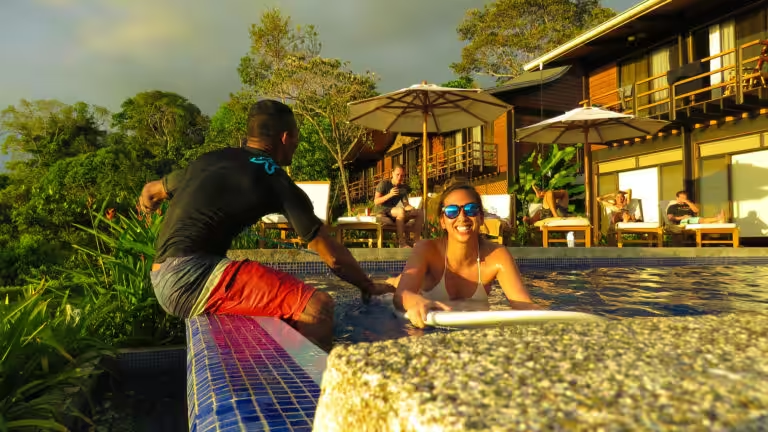
If you’re ready to experience the south Pacific coast at its best, Kalon Surf offers a week-long all-inclusive experience: personalized surf coaching, gourmet meals, yoga and wellness, and a boutique mountaintop resort overlooking the Pacific. Airport transfers included. No planning required beyond choosing your dates.