Are There Snakes in Costa Rica? Yes, and Here Is How We Handle Them
Yes. Costa Rica has about 140 snake species, roughly two dozen of them venomous. Who actually gets bitten, the one snake worth knowing on the South Pacific coast, and how our team is trained to handle them.
Guests ask us whether there are snakes in Costa Rica, and whether they’re going to meet one. It’s a fair question, and we’d rather answer it plainly.
Yes. Costa Rica has about 140 snake species, and roughly two dozen of them are venomous. The institute that makes the country’s antivenom records about 600 venomous bites a year, with one or two deaths. Most recorded bites happen at houses, on roads, and in farm work. They usually land on the feet or legs, from stepping on a snake. A visitor can meet one on this coast, and nobody publishes the odds of that for a walk in the forest.
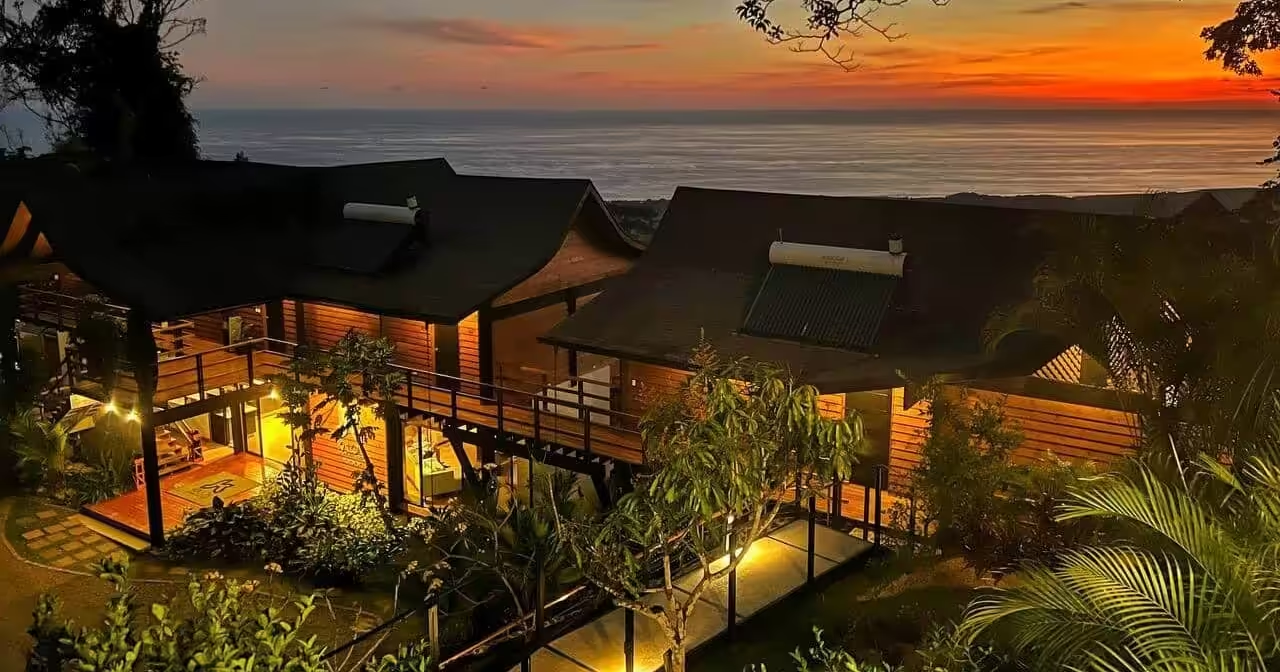
We live in the hills above Dominical, on Costa Rica’s South Pacific coast. Our 7.9 acres are mostly rainforest, and a trail leads from the grounds into primary rainforest, so this is something our team plans for.
Which snake matters on the South Pacific?
The one to know is the terciopelo, also called the fer-de-lance. It’s abundant in low, wet country on the Pacific from the Central Pacific south, and on the Caribbean side, up to about 4,900 feet. The resort sits at 1,200 feet above the coast, inside that range. This snake accounts for more than half of the region’s snakebites. It has adapted to places people use, and it lives near houses. A researcher at the institute names farmers and tour guides as the people most exposed, and names the southern region, where we are, among those with more bites.
No page from the institute or the public health system separates tourists from other patients. In hospital records from 2012 to 2014, 5% of bites with a place recorded were recreation in wild places, rivers, or mountains. Those same years showed most bites in the rainy season, with peaks from May to July and from October to November. October is one of those peak months. If that is when you are coming, we have written about October on this coast.
Several venomous snakes in this wet forest are active at night. The eyelash viper lives in the trees and is usually out after dark.
Are there rattlesnakes near Dominical?
One snake people expect here doesn’t live here. The institute places the rattlesnake in the lowlands of Guanacaste and northern Puntarenas, in dry country, relatively common along forest edges. We are on the wet South Pacific, and that page does not put the rattlesnake here. The cantil occurs only in the Guanacaste Conservation Area.
What do we do when a snake shows up?
Living next to rainforest, we plan for the day a snake turns up, and our team is trained for it. We have the tools for it, specialists from outside train the team, and we follow a set process. The other half of the work happens before any snake appears: we understand what attracts them, and we work to keep it to a minimum around the resort.
For you, that makes it simple. If you see one, step back, leave it alone, and tell someone on the team.
What should you do on the trail?
The bite the institute describes is usually a foot or a leg coming down on a snake.
- Closed shoes. Wear them on the trail. The institute prefers rubber or leather boots that reach the knee.
- A light after dark. Some of the venomous snakes on this coast are active at night or at twilight. Light the ground before you step, and look at a branch before you reach.
- Look before you reach. Keep your hands and feet out of holes, caves, and the space under rocks and branches. Some snakes are in trees and bushes, so look before you pick fruit. If debris has to be moved, use a tool.
- Step back and tell us. Don’t pause to decide whether it is venomous. Don’t catch it, and don’t kill it. Move away and tell someone on the team. If a snake is inside a house, call the firefighters, which is what a researcher at the institute recommends.
The institute also asks you to have another person with you, so you have help if something happens.
What do you do if someone is bitten?
Follow the institute’s first aid, and don’t add to it. Calm the person and have them rest. Clean the bite with soap. Remove any tourniquet. Keep the person hydrated. Keep the bitten limb still. The step they mark as most important is to get the person at once to the nearest hospital or health center, so antivenom can be given as soon as possible. Call 9-1-1, the number printed on the institute’s pages.
Don’t cut the wound or apply a tourniquet. Don’t use ice or cold packs. Don’t give chemicals, plant or animal extracts, or alcohol. Don’t suck the bite. There’s no need to bring the snake.
Costa Rica makes its own antivenom. The institute produces a serum for vipers and a separate serum for coral snakes, and the public health system administers them. We can’t say what any one clinic has in stock. If there’s a medical situation, our team can respond with first aid or get someone to the hospital quickly. Hospitals in nearby towns are within a reasonable drive. Towns near Dominical, Uvita, and Manuel Antonio have clinics with qualified doctors, and we’re connected to local medical resources. Travel insurance isn’t required, and we strongly recommend it.
Toucans, sloths, and monkeys are regular visitors here because their habitat was never removed, and a trail from the grounds leads into that primary rainforest. This is what a week with us looks like.
Common Questions
Are there rattlesnakes in Dominical or Uvita?
Do tourists get bitten by snakes in Costa Rica?
Can a sea snake bite you while surfing?
What number do you call for a snakebite in Costa Rica?
Written by the team at Kalon Surf, the resort Kjeld and Silene founded in the hills above Dominical in 2011.