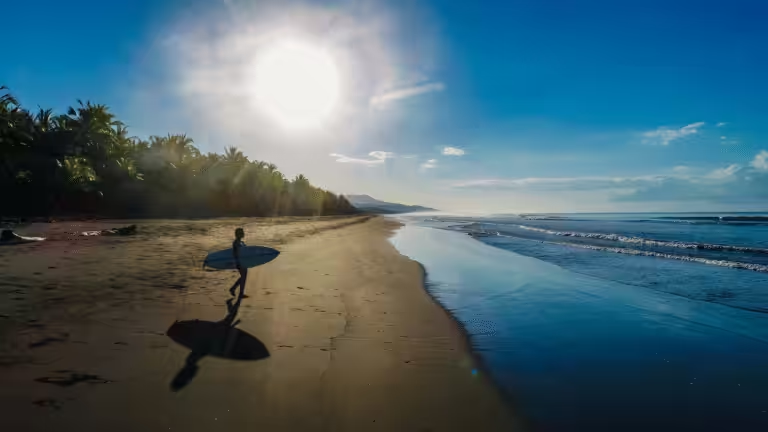
Surfing looks relaxed from the beach. Someone glides across a wave, steps off, paddles back out. It seems effortless.
It’s not. Surfing is an adventure sport — you’re in the ocean, things move fast, and the environment doesn’t adjust to your skill level. That’s not meant to scare you. It’s meant to set the right expectation, because when you understand what you’re getting into, you enjoy it so much more.
We get a lot of first-time surfers at Kalon Surf, and watching someone go from nervous on day one to riding waves by the end of the week is one of the best parts of what we do. But it doesn’t happen by accident. There’s a method to it, and it starts well before you paddle out.
Here’s what you actually need to know.
Start on a Beach Break
Not all surf spots are the same, and where you learn matters more than most people realize.
A beach break is where waves break over a sandy bottom. It’s not only for beginners — experienced surfers love beach breaks too — but sand is forgiving in a way that reef and rock are not. When you fall, and you will fall plenty, you land softly and get right back up.
A reef break is different. Hard coral or rock sits just below the surface, and a bad wipeout can mean cuts or worse. There’s simply no reason to take that risk while you’re still learning to stand up.
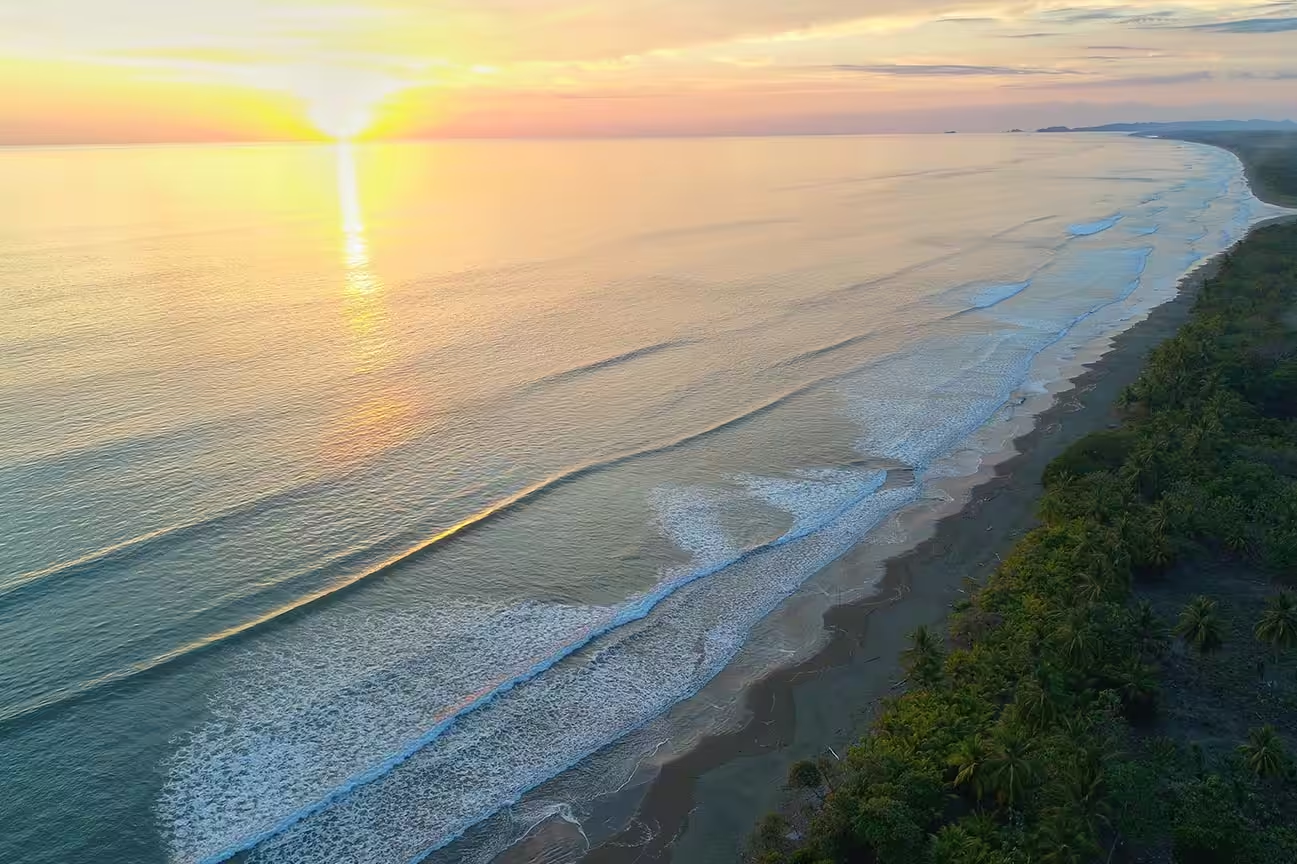
We take our guests to beach breaks along the Pacific coast near Dominical. The waves are consistent, the bottoms are sandy, and the conditions are right for people catching their first waves. We also deliberately choose beaches that aren’t crowded. Large groups with mixed skill levels make surfing stressful instead of fun, and that’s the opposite of what your first week should feel like.
Get Comfortable With Your Board Before the Ocean
Your surfboard is your best tool and, if you don’t manage it properly, the thing most likely to cause a problem. A board moving through whitewater has real force behind it, and a beginner who can’t control theirs becomes a hazard to themselves and everyone nearby.
We spend time on this before you ever touch a wave.
Pool sessions come first. Sitting on a surfboard is surprisingly unstable when you’ve never done it. We run sessions in the pool at the resort so you can work on your balance and positioning in calm water. It sounds like a small thing, but it makes a noticeable difference when you paddle out for the first time. The ocean is going to throw a lot at you — current, waves, adrenaline — and removing the board as a variable helps enormously.
Protect your head every time. Whenever you come up after a fall, your first move is to put your arm up over your head. Your board is attached to your ankle by a leash, which means it’s somewhere nearby, and you need to locate it before it finds you. We drill this until it becomes instinct, because in the moment you’ll forget if you haven’t practiced it.
We also provide high-quality helmets for anyone who wants one. There’s an outdated idea that helmets aren’t cool — that’s nonsense. Many pro surfers wear them now, and the ones we have look great and offer real protection. It’s your head. There’s no good reason not to protect it.
Learn to get through the waves without exhausting yourself. Paddling out through breaking waves will drain you faster than anything else in surfing if you don’t know the technique. We teach the turtle roll — flipping the board over and holding on underneath as a wave passes — and the duck dive — pushing the nose under an incoming wave and letting it roll over you. These save an enormous amount of energy, which means you actually have something left when it’s time to catch waves.
Understand the Ocean
The ocean isn’t a swimming pool with waves. It has currents, rhythms, and patterns, and spending a few minutes reading them before you go in will make your entire session better.
Watch before you paddle out. We ask guests to spend fifteen to twenty minutes on the beach just observing. Where are the waves breaking? How big do the sets get? Where are other surfers sitting? This tells you where to enter, where to position yourself, and what to expect. It also calms your nerves, because you start to see that the ocean has a rhythm you can work with rather than fight against.
Rip currents aren’t just dangerous — they’re useful. Most people hear “rip current” and think of something that will drag them out to sea. And yes, if you don’t understand what’s happening, a rip can be frightening. But here’s what most beginners don’t learn: experienced surfers use rip currents to get out to the break more easily. The current does the work for you.
We teach you how to spot rips, how to use them when it makes sense, and how to exit one if you need to — typically by swimming sideways or toward a sandbank where you can stand and walk back. Understanding the ocean instead of fearing it changes everything about how you feel in the water.
Know the Etiquette
Surf etiquette exists for safety, not just politeness. When multiple people share the same waves, everyone needs to operate by the same set of rules.
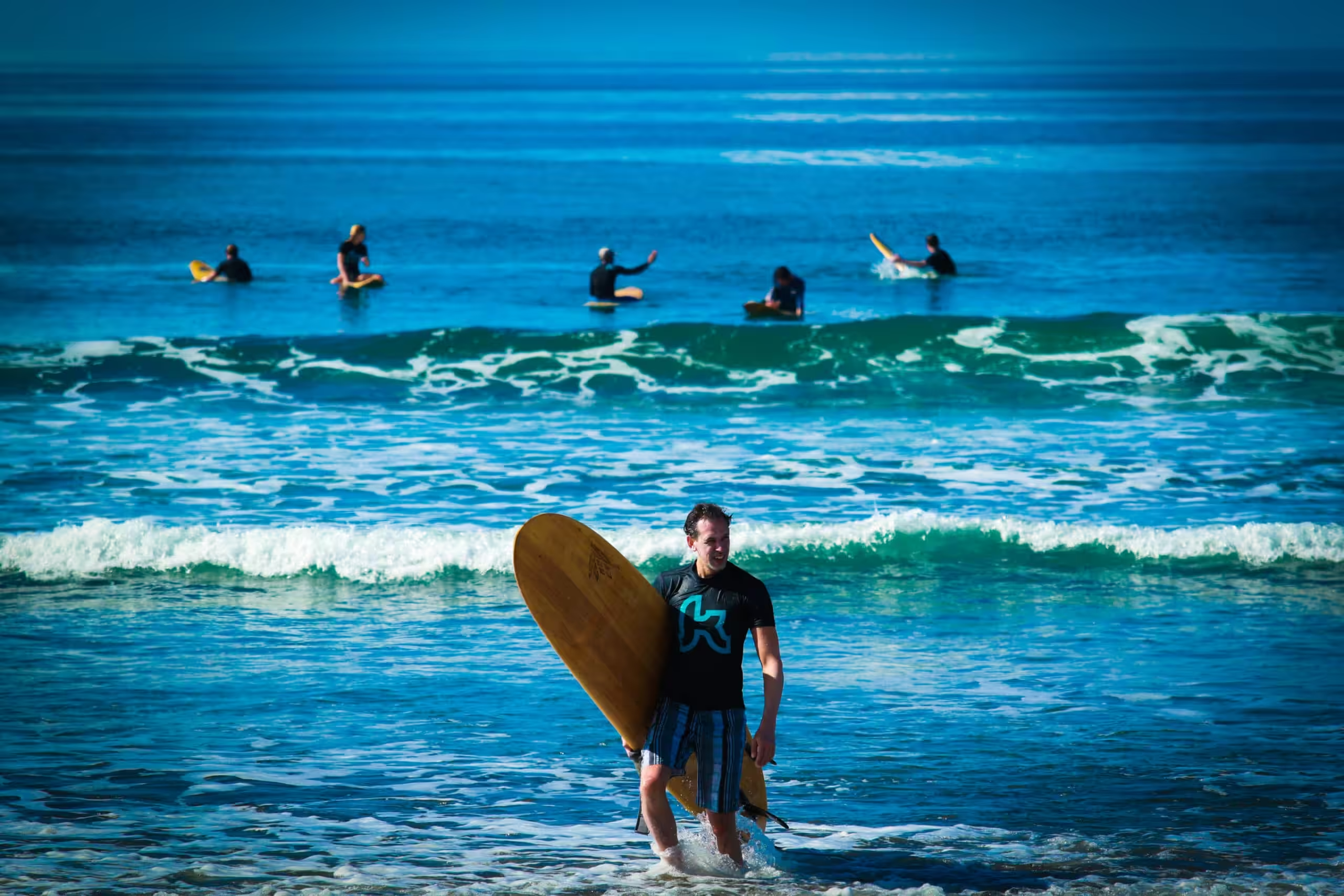
One surfer per wave. The person closest to where the wave breaks — the “deeper” surfer — has priority. If you and someone else both turn to catch the same wave and they’re closer to the breaking point, you pull back and wait for the next one.
When waves break in both directions, surfers can split them. You’ll often hear someone call out “going right” or “going left” to claim their direction. Listen for it.
Don’t paddle around others to get position. If there’s a single takeoff spot and a lineup of surfers waiting, you wait your turn and move up gradually. Cutting the line is one of the fastest ways to create tension in the water.
If you make a mistake, just own it. The surf culture around Dominical is still very much Pura Vida. Unlike some spots around the world where localism can be aggressive and territorial, the vibe here is relaxed. If you accidentally drop in on someone’s wave, put your hand up and apologize. People are generally fine with it. Everyone was a beginner once.
Take Care of Your Body
Surfing is more physically demanding than it looks, and Costa Rica’s tropical sun adds another layer to manage.
Sunscreen, constantly. We recommend reapplying every hour and a half. The combination of water, reflection, and equatorial sun is intense, and a bad burn on day two can ruin the rest of your week. We also sell surf caps at the resort for the days when the sun is especially strong.
Stay fueled and hydrated. We bring fresh fruit and drinks down to the beach during sessions. You’re burning more energy than you realize out there, and keeping on top of nutrition and hydration makes a real difference in your focus and endurance.
Respect the rest day. Our schedule includes a day off midweek on Wednesday, and it’s there for a reason. We’ve seen it many times — guests who push through and surf on Wednesday are often too tired to enjoy Thursday and Friday, which is exactly when things start clicking. Your body needs recovery time, especially when you’re using muscles you don’t normally use. Take the day. Get a massage, go on a tour, explore Dominical. You’ll come back to the water on Thursday feeling stronger and surfing better.
Use Video Analysis to Accelerate Your Progress
You might think video analysis is only for advanced surfers. It’s actually the opposite — it might be the single most effective tool for beginners.
Here’s why. During a session, we’ll tell you something like “get your chest up more.” And you’ll say, completely sincerely, “I am putting my chest up!” Then we review the video together, and you can see on screen that you’re hunched over far more than you thought. That moment — seeing the gap between what you feel and what’s actually happening — is incredibly powerful. It changes things almost immediately, and the next day you come back noticeably better.
We can pause the footage and show you exactly what went wrong. Your foot was slightly off-center on that pop-up — that’s why you fell left. Your arms were too wide on that paddle — that’s why you lost speed. Without video, these small corrections are very hard to communicate because everything happens so fast in the water. With it, guests improve dramatically faster.
You also learn by watching others in your group. Seeing someone else make the same mistake you’ve been making, and then seeing the correction, reinforces the lesson from a different angle.
Practice Your Pop-Up on Land
The pop-up — going from lying on the board to standing — is the fundamental move in surfing, and the good news is you can practice it without water.
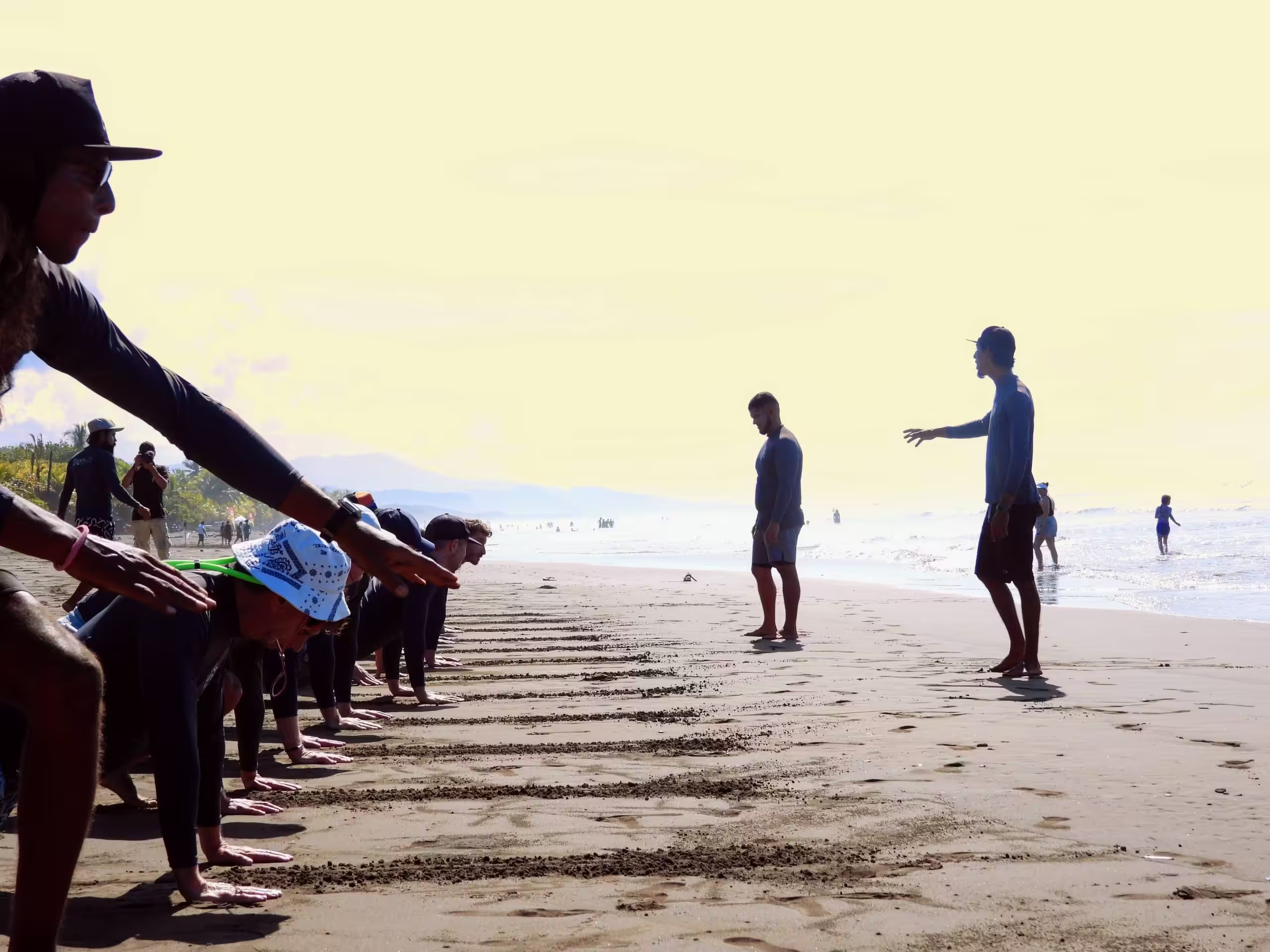
We have a specialized board at the resort that’s built like a balance board in the shape of a surfboard. It’s designed for drilling your pop-up with realistic instability. But you don’t even need special equipment. You can practice in your room using a tile line or the edge of a towel as your center.
The routine is simple: ten pop-ups, short pause, repeat until you’ve done thirty. Each one follows the sequence we teach — one, two, three, get up, attack position. The whole thing takes a few minutes, but the returns are enormous. You’re building muscle memory so that when a wave picks you up and you have half a second to react, your body knows what to do without thinking.
Guests who put in these reps between sessions consistently progress faster. It’s one of those small commitments that pays off far beyond the effort involved.
Catching Your First Wave
With the fundamentals in place — board control, ocean awareness, etiquette, and your pop-up — catching a wave follows naturally.
You’ll paddle to the lineup, position yourself where our coaches direct you, and watch for your wave. When one comes, you point your board toward shore, lie down, and start paddling hard. There’s a moment where you feel the wave pick you up and your speed increases — that’s your cue. Pop up in one fluid motion, find your balance, and ride.
The first time it works, you’ll understand why people get hooked on this sport for life.
It won’t be perfect. Your stance will be off, your arms will flail, and you might fall within seconds. That’s completely normal. But each attempt gets a little smoother, each session a little more confident, and by the end of the week you’ll look back at day one and barely recognize the difference.
The Goal Is Independence
Everything we do at Kalon Surf is built around one idea: when you leave, you can continue surfing on your own.
The safety habits, the ocean reading, the etiquette, the technique — none of it is just for your week with us. These are skills that stay with you. We want you to go home, paddle out at a beach somewhere, read the conditions, respect the lineup, catch a wave, and feel completely confident doing it.
That’s what a real surf education looks like. Not just a fun holiday, though it absolutely is that too, but a foundation you carry forward every time you step into the water.
If you’re thinking about learning to surf in Costa Rica, we’d love to have you. Come as a beginner. Leave as a surfer.