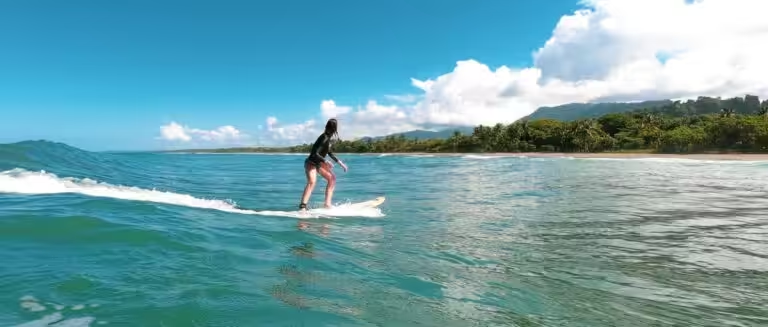
Our guests run companies, lead teams, and live by their calendars. They arrive at Kalon exhausted, phones glued to their hands, running through tomorrow’s agenda while they’re still unpacking. By day three, the phone is on the nightstand and they’re actually present.
I didn’t set out to build a mindfulness retreat. We built a surf resort. But after fifteen years of watching this pattern repeat — week after week, with doctors, founders, lawyers, creatives, parents who carry everything for everyone — I’ve come to believe that surfing is the most effective mindfulness practice most busy people will ever try.
It’s not sitting on a cushion. It’s not guided breathing in a dark room. It’s a moving meditation that forces you into the present moment whether you’re ready for it or not.
Total presence, no choice in the matter
When you’re paddling for a wave, there is zero room for Slack messages, tomorrow’s board meeting, or last quarter’s numbers. Your entire nervous system locks onto one thing: reading the water, feeling the board, timing the pop-up. That kind of hyper-focus is the same flow state that people spend thousands trying to access through coaching and offsites — except here it happens naturally, every morning, before breakfast.
In the water, it’s just you, your thoughts, and the waves. No phones, no distractions — just warm water, beautiful surroundings, and the rhythm of waiting for the right wave. There’s something about the ocean’s rhythm that syncs with your nervous system, naturally shifting you from fight-or-flight into something calmer and more grounded.
At Kalon, our coaches work with a 3:1 ratio. That means someone is watching your technique on every single wave, and you review your own footage in the afternoon video analysis sessions. There’s nowhere to hide from the feedback loop. For people who are used to being the expert in the room, that level of vulnerability — and growth — is rare.
Learning to let go (and the Day Three wall)
The ocean doesn’t care about your title. One minute the wave looks perfect, the next it closes out. High-achievers tend to hate unpredictability. They plan, they control, they optimize. Surfing quietly dismantles all of that.
We run Saturday to Saturday, which gives us time to actually teach people properly. Most surf schools don’t have that luxury. Here’s what usually happens: day one, guests stand up on the board. Day two, they’re riding waves in the whitewater. And then day three hits — they start overthinking. The board isn’t doing what they want it to do. Frustration creeps in.
This is where the real mindfulness lesson lives. There’s a saying in surfing: the best surfer is the one having the most fun. It sounds like a bumper sticker, but it’s genuinely true. The more you try to force things, the worse it gets. In surfing, and honestly in life, sometimes you just need to stop overdoing it for things to flow.
That’s what we tell our guests. We bring them back to their surroundings. Look around you — you’re in warm water, palm trees, on a beautiful beach. You’re eating watermelon that’s absurdly sweet. You’ve got a coconut in your hand. Compare this moment to being frustrated in your office back home. Suddenly they laugh. And then they relax. And then — almost always — the surfing starts to click.
The guests who resist this the most on Monday are usually the ones who talk about it the most at the final dinner on Friday. Something shifts when you stop trying to control the environment and start responding to it instead.

The early morning reset
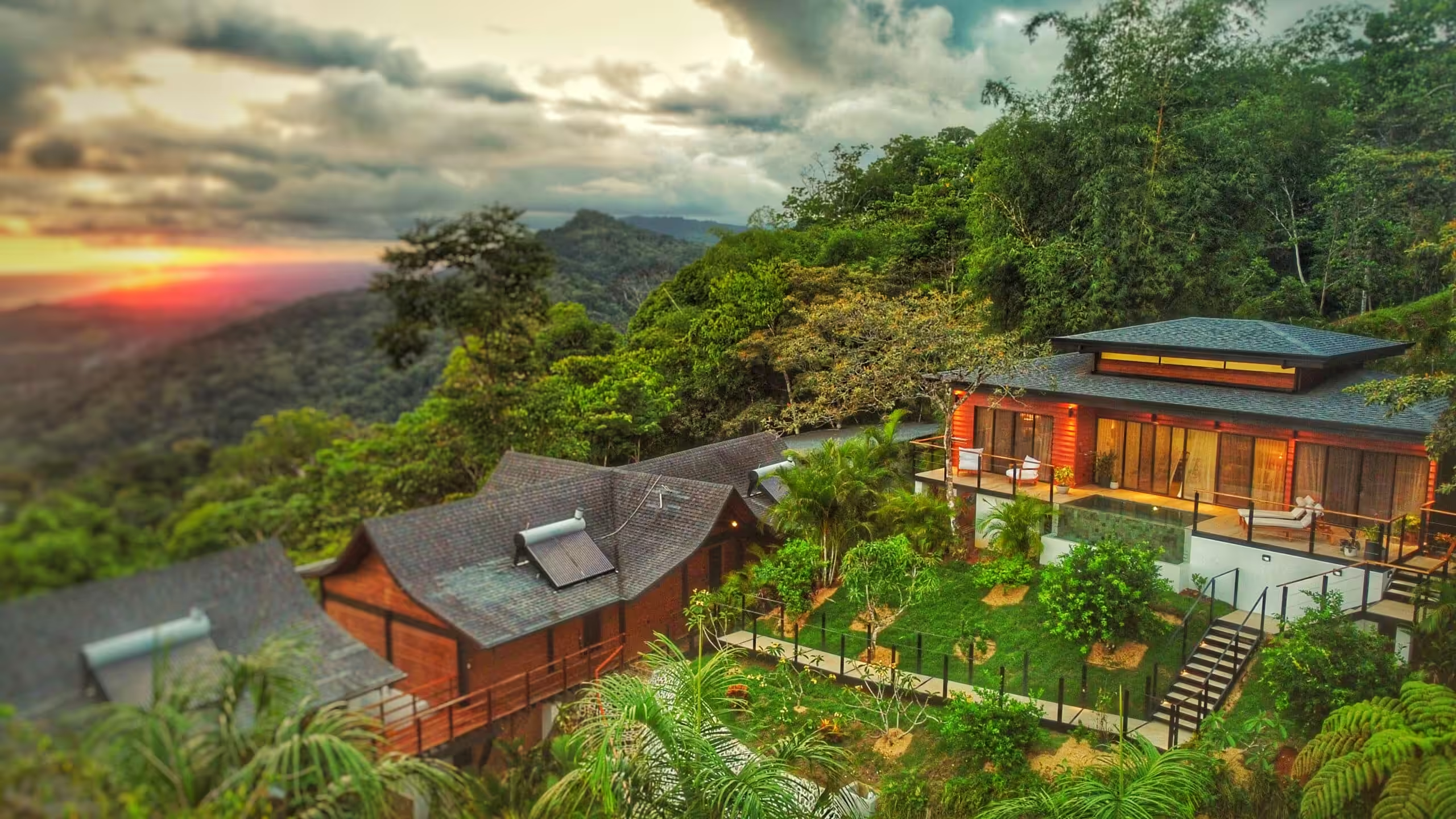
Standing on the beach at six in the morning, watching the sun come up over the Pacific before the first session, you can feel your nervous system downshift in real time. The mental chatter that follows most of our guests everywhere — the running to-do list, the half-drafted emails in their heads — it just stops.
This isn’t mystical. Being in and around the ocean changes your physiology. The sound of waves, the salt air, the physical immersion in warm water. By mid-week, guests start sleeping deeper than they have in months. They stop reaching for their phones first thing in the morning. The combination of hours in the water, chef-prepared meals, and a quiet jungle setting tends to reset people in a way that a weekend at a spa simply doesn’t.
Mind and body on the same team
Most busy professionals live from the neck up. Screen to meeting to screen to bed. Surfing reconnects the two halves in a way that feels almost startling after years of being disconnected.
You cannot think your way through a wave. You have to feel it — the timing, the weight shift, the moment your feet land. Paddling builds upper body strength without you noticing. Popping up works your core, your legs, your balance. By mid-week, guests start moving differently — more confidently, more physically aware. Many say it’s the first time in years their body and mind have been working together instead of one dragging the other along.
Our daily yoga sessions are designed specifically for surfing recovery, and they reinforce this reconnection. But it’s the water that does the real work.
Embracing imperfection
Perfectionists hate falling. At Kalon, I watch people who run serious businesses eat it on the same wave three times in a row — and then laugh about it over breakfast with people they met two days ago.
That laughter matters. It’s the moment the practice actually lands. When someone who’s used to being the most competent person in the room can wipe out in front of strangers, come up grinning, and paddle back out without analyzing what went wrong — something has loosened. The need to perform, to be competent at all times, to never look foolish — surfing gently breaks all of it down.
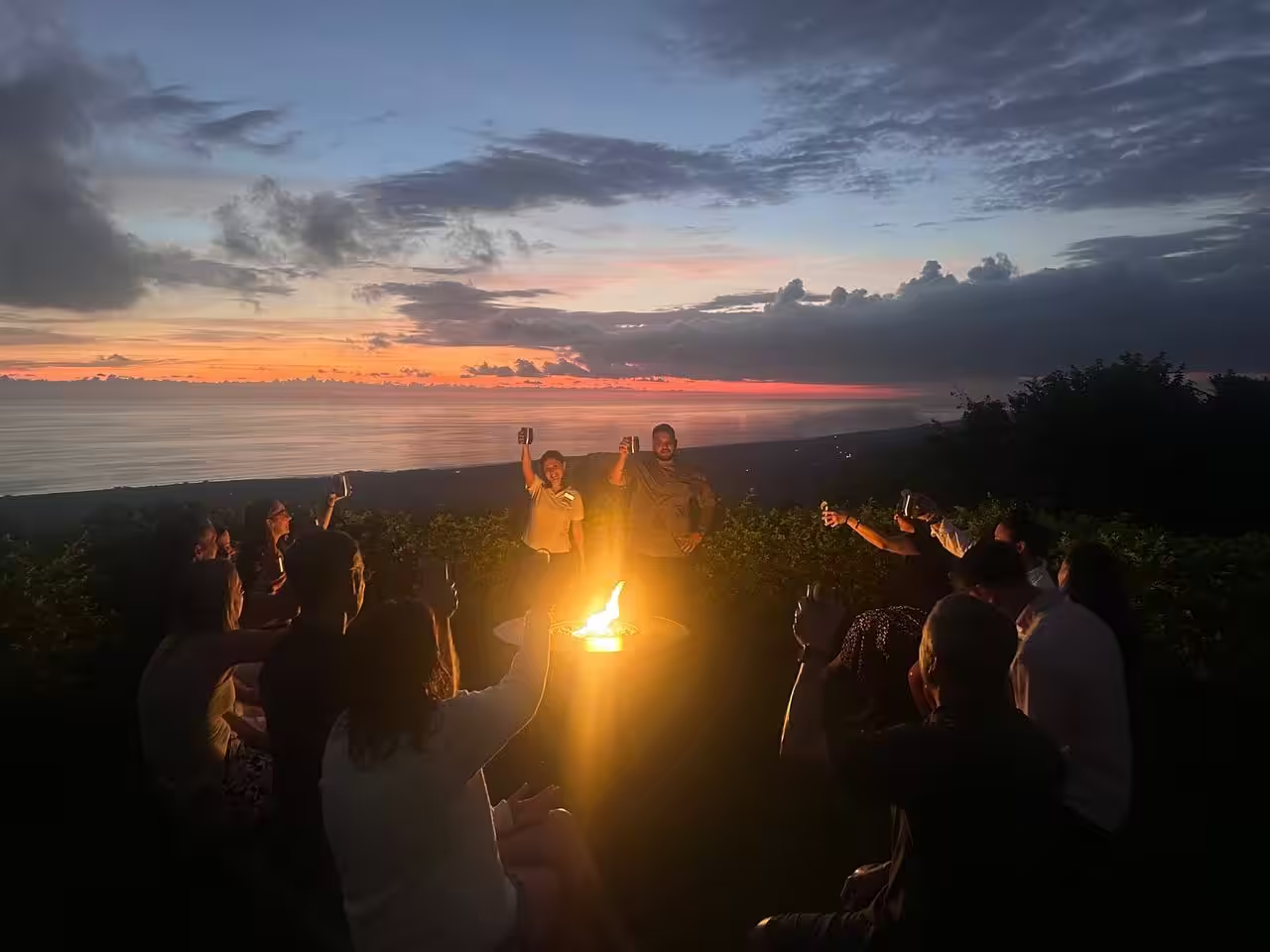
By Thursday, the whole dynamic of the group has usually shifted. People who arrived polished and guarded are now trading stories at dinner — everyone around one big table, three-course meal, barefoot, sunburned, genuinely relaxed. Phones stay in rooms. Conversations go longer. The armor comes off.
Virtually every week, guests leave as friends. It sounds cliché, but it keeps happening. Several have come back together. Others meet up in New York or LA or Miami. They go skiing together, travel to new places. The connections extend far beyond their time here, and it starts at that dinner table.
Why a week matters
We keep the program to exactly seven nights for a reason. It takes about three days for the mental noise to quiet down. Days four and five are where the real shift happens — that’s when guests start surfing better, sleeping deeper, and connecting more openly. Days six and seven are about consolidation, about anchoring the new rhythm so it doesn’t evaporate the moment they land back home.
Shorter trips don’t get there. A long weekend might be fun, but it won’t change anything. A full week gives people enough time to genuinely decompress without feeling like they’ve been gone too long. It’s the minimum effective dose for a real reset.
It’s never too late to start
Our oldest first-time surfer was 72. He came to us having never stood on a board, learned to surf, and continues surfing to this day. Our oldest guest overall was 82 — and he did brilliantly.
The thing about surfing is that there are styles for everyone. Radical shortboarding, relaxed longboarding, and everything in between. Many guests in their 40s and 50s learn with us and leave asking where to buy boards so they can keep going back home. You take it at your own speed, at your own level. It’s genuinely for everyone.
What it looks like when you leave
Guests don’t just leave relaxed. They leave clear. There’s a difference. Relaxation fades by Tuesday. Clarity — about what matters, about what drains you, about how you want to spend your energy — that sticks.
I hear from guests weeks and months later who say the week at Kalon changed their relationship with stress, with work, with presence. Not because we taught them meditation or gave them a framework, but because the ocean did what the ocean does: it reminded them what it feels like to be fully in one moment, over and over, until the habit started to hold.
If you’ve been measuring your life by output, try measuring it by presence for one week. See what that week looks like — and give the ocean a chance to show you what you’ve been missing.