Our oldest first-time surfer was 82.
He’d never touched a board. He came to Kalon Surf, spent a week with our coaches, and did brilliantly. Before him, we had a 72-year-old who learned to surf with us and continues surfing to this day.
We share these stories not because they’re exceptional — we share them because they’re not. Every single week, guests in their 40s, 50s, and 60s arrive at Kalon having never surfed, convinced they’ve left it too late. By Friday, they’re riding green waves and asking us where to buy a board back home.
If surfing has been sitting on your bucket list for years, this is your sign. You’re not too old. You’re not too late. And you’re definitely not alone.
Who actually learns to surf at Kalon
About 60% of our guests have never surfed before. The typical age range is 30 to 65. Over 60% come solo. The rest come as couples, friends, or families. They’re doctors, lawyers, entrepreneurs, consultants, teachers, and creatives — people with busy lives who’ve earned a week that’s more than just sitting by a pool.
What they have in common isn’t athleticism or surf experience. It’s a willingness to try something new.
One guest who turned 50 put it perfectly: surfing was on both her and her husband’s bucket lists, they hoped to just get up on the boards — and by the end of the week, they’d really learned to surf. She said the experience was an “unbelievable vacation” and that she’d be back.
Another guest loved surfing again after 40 years — picked it back up at Kalon like she’d never stopped.
Two friends turning 40 celebrated with a week at Kalon. One of them wrote that she’d caught amazing waves, learned more about surfing in one week than she ever thought possible, and would always remember the experience.
These are real guests. This happens every week.
Why surfing is easier to learn than you think
There’s a persistent myth that surfing requires extraordinary fitness, perfect balance, and decades of ocean time. It doesn’t.
Surfing is primarily about technique and timing — not raw strength. We regularly see very fit gym-goers struggle on a board while guests who’ve never seen the inside of a gym pick it up quickly, simply because their technique is better. Surfing doesn’t care about your bench press. It cares about how you move.
At Kalon, we coach with a 3:1 guest-to-coach ratio. Every session is personalized. Beginners start in the pool, where you can practice your pop-up and get comfortable with the board in a controlled environment. Then you move to the beach for dry land drills. Then the ocean — with your coach right there in the water, positioning you for waves, giving you real-time feedback.
The typical progression looks like this:
Day 1: You stand up. Not perfectly, not every time — but you get the feeling. Most guests are up on their first day.
Day 2: You’re catching waves in the whitewater — riding the broken wave toward shore, building confidence and muscle memory.
Day 3: This is where it gets interesting. Many guests hit a wall here — the board isn’t doing what they want, they start overthinking, they get frustrated. Our coaches know this pattern well. As we tell our guests: look around you. You’re in warm water. You’re on a beautiful beach. You’re eating watermelon between sets. You have a coconut in your hand. Life is good. The best surfer is the one having the most fun — and when you stop forcing it, the surfing gets better.
Days 4–5: This is where the magic happens. The overthinking fades, the technique starts to click, and many guests move to green (unbroken) waves. The daily video analysis accelerates everything — you can see exactly what your body is doing and what to adjust.
End of the week: Most guests are surfing green waves with guided positioning from their coach. Some are riding them independently. All of them are better than they imagined they’d be.
The sport that grows with you
Here’s something most people don’t know about surfing: it adapts to your age and body, not the other way around.
As you get older and things become more physically demanding, you simply use a board with more volume. More volume means more stability, easier paddling, and earlier wave catching. Longboarding is one of the most elegant, enjoyable forms of surfing — and it’s perfectly suited to people who aren’t interested in aerial tricks but love the feeling of gliding across a wave.
There are styles for everyone: relaxed longboarding, progressive shortboarding, and everything in between. The sport grows with you, which means you can keep surfing for decades after you learn. Many of our guests in their 40s and 50s learn at Kalon and then continue surfing at home. Two or three years later, they come back — noticeably better — wanting to progress further. That cycle never gets old for us to watch.
Why professionals are choosing surf retreats as their reset
There’s a trend we’ve noticed over the past few years: more mid-career professionals — founders, executives, consultants, creatives — are booking surf retreats not just as vacations, but as intentional resets. Some are between roles. Some are burned out. Some just realized they’ve spent years mastering control in meetings and decisions, and they want an experience that asks them to let go.
Surfing gives you that. You can’t control the ocean. You have to feel it, respond to it, adapt. That daily practice of surrendering control — even for a few hours — is surprisingly freeing for people who spend their lives managing everything.
The physical aspect matters too. Surfing is a full-body workout that doesn’t feel like exercise because you’re focused entirely on the wave. Guests consistently tell us they feel stronger, more alive, and more connected to their bodies after just one week. And the mental clarity that comes from hours of complete focus — no phone, no email, just water and waves — is something most productivity tools can’t touch.
One guest, a self-described luxury resort connoisseur who’s stayed at Four Seasons properties worldwide, came in March with her teenage daughter. She wrote that the week at Kalon was “perfection — far better than I imagined.” Her daughter said it was the best thing they’d ever done. That guest wasn’t a surfer. She was someone who’d been everywhere and wanted something that actually meant something.
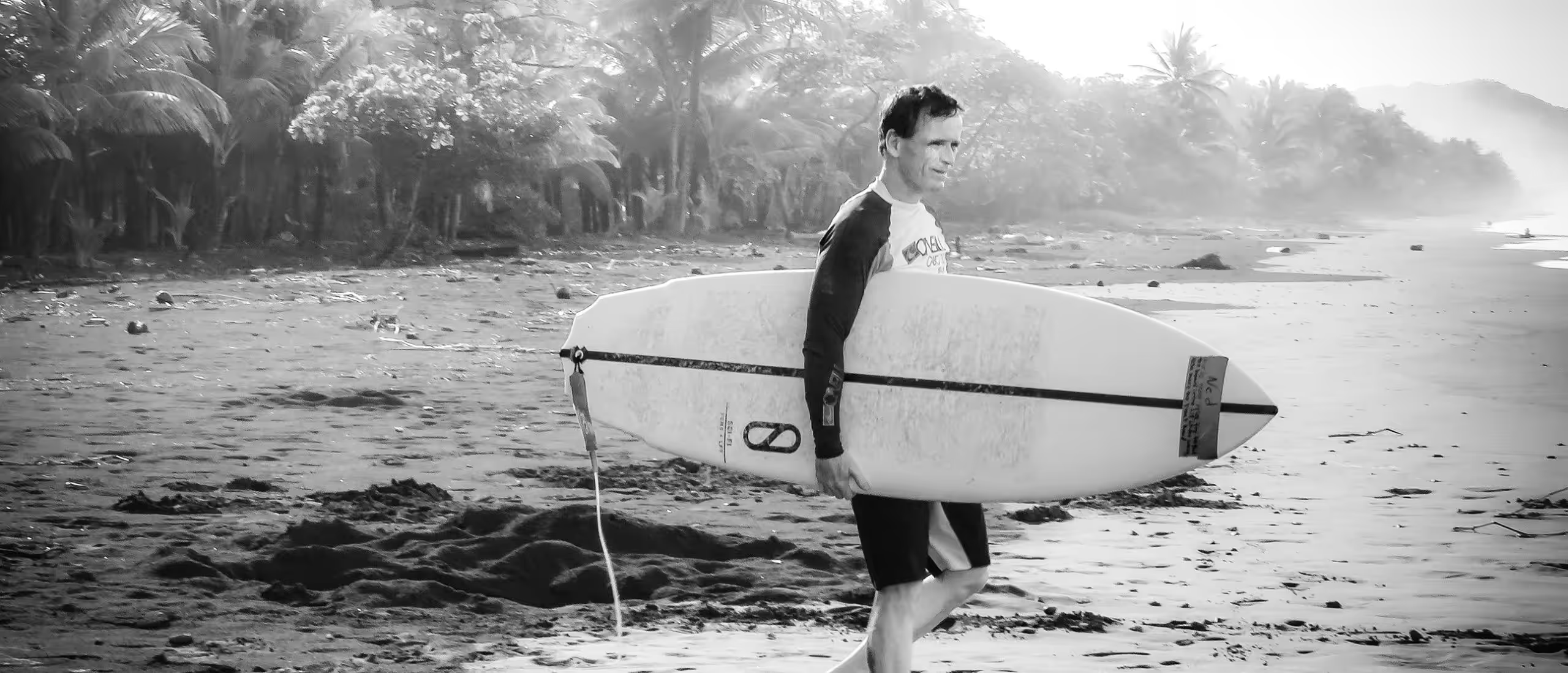
Ned Sheeran, who’s visited Kalon over 15 times, described it well: a place where you escape from a busy life, unwind and relax while chasing the perfect wave and hanging out with interesting, friendly people. He’s a successful professional who keeps coming back not because he needs another vacation, but because nothing else resets him the same way.
Costa Rica makes it easy
Not every destination works for a first surf trip in your 40s or 50s. You need warm water (no wetsuit anxiety), consistent waves (not too big, not too small), uncrowded breaks (no pressure from locals), and a comfortable place to come home to after a long day in the ocean.
Costa Rica checks every box:
The water is 78°F year-round — warm, welcoming, no wetsuit needed. The south Pacific coast around Dominical offers consistent beach breaks suited to all levels. Our coaches select the best break each day based on conditions — you’re never thrown into waves beyond your ability. The beaches are uncrowded, so you have space to learn without pressure. And Costa Rica requires no visa for stays under 90 days for most nationalities, which matters for guests considering an extended stay.
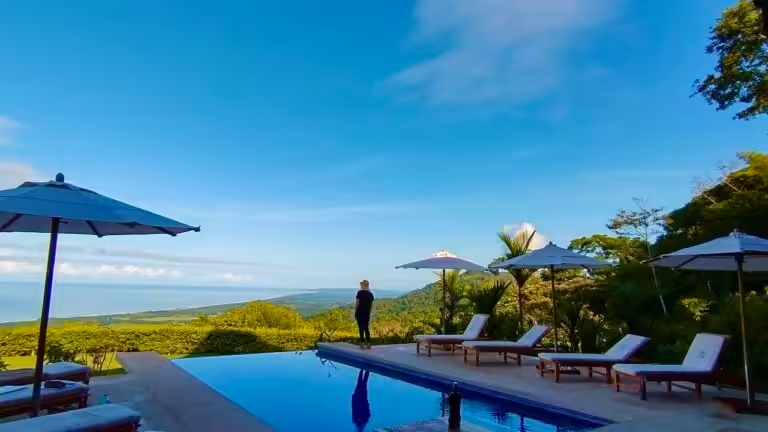
At Kalon, you’re on a private 6.4-acre estate at 1,200 feet elevation, looking out over the Pacific. After surfing, you come back to an infinity pool, a three-course gourmet dinner, yoga on the jungle deck, and a mid-week massage. It’s not a rustic surf camp. It’s a luxury resort built around coaching.
That combination — serious coaching in a truly comfortable environment — is what makes the difference for guests who’ve never surfed and aren’t interested in roughing it.
How to plan your first surf trip
Start with a week. Our program runs Saturday to Saturday, and there’s a reason for that: it takes about three days for the mental noise to quiet down and the technique to click. Days four and five are where the real progression happens. A long weekend isn’t enough — a full week is the minimum effective dose.
Don’t train specifically beforehand. General fitness helps, but you don’t need to be in peak shape. Push-ups, squats, and swimming are useful. But the most important thing you bring is your attitude, not your fitness level.
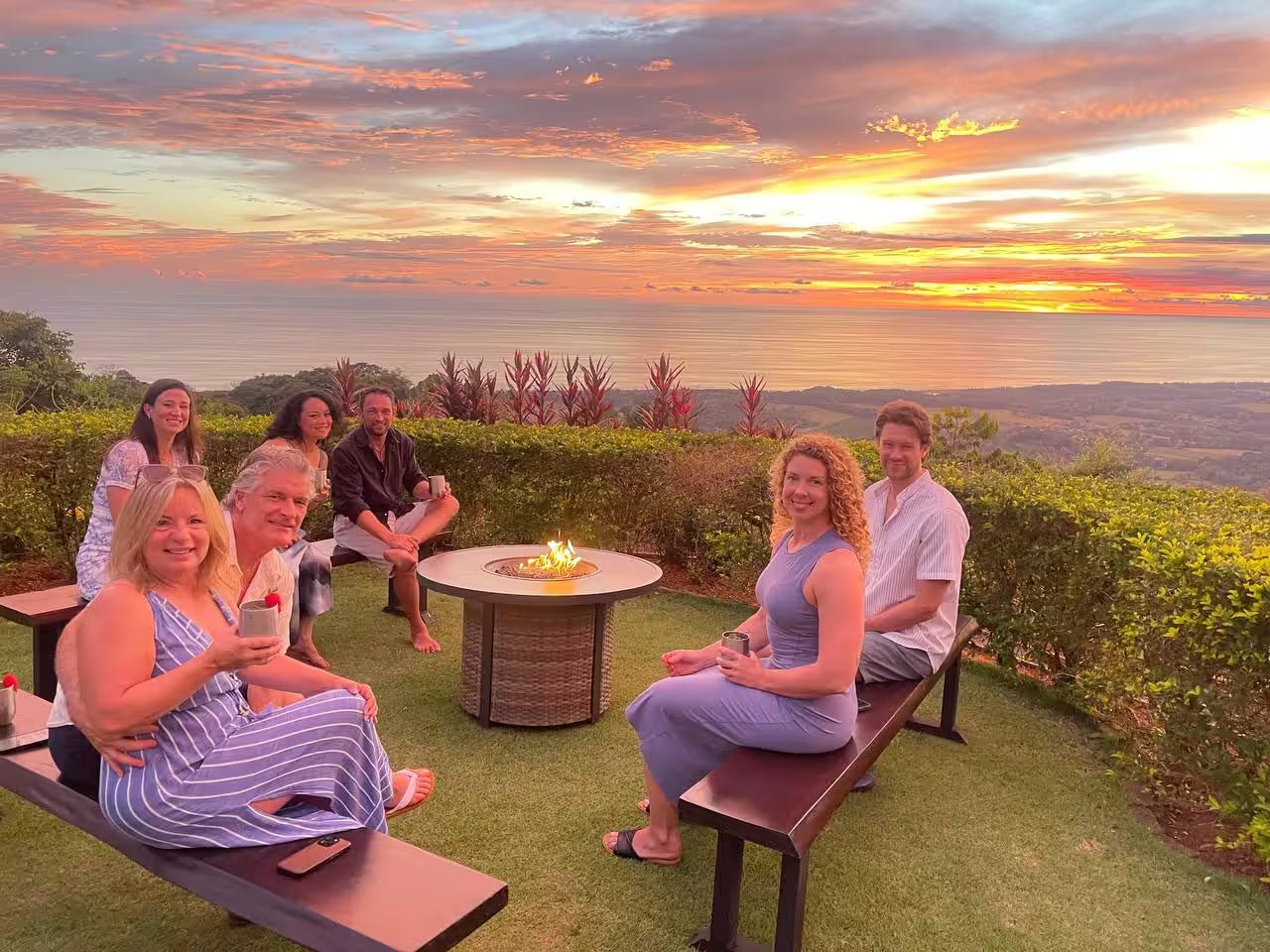
Come solo if you want. Over 60% of our guests come alone. The communal dinner table, the shared surf sessions, and the intimate group size (max 20 guests) mean you’ll know everyone by name within 48 hours. Guests consistently say the community was the part they didn’t expect and loved the most.
Bring a partner or friend if you prefer. Different skill levels aren’t a problem — the 3:1 coaching ratio means each person gets individual attention regardless of where they’re starting. Couples especially love this: you share the experience but progress at your own pace.
Don’t overthink the timing. Costa Rica has excellent surf year-round. Dry season (December–April) offers the most sunshine. Green season (May–November) delivers bigger waves and lush jungle. The veranito (June–August) is a hidden gem — dry-season conditions within the green season. Any month works.
Your bucket list is waiting
If you’ve been telling yourself “someday” for years, make this the year. You don’t need to be young, fit, or brave. You need a board, a coach, and a wave — and we’ll take care of all three.